In ihrem dreißigsten Jahr begrüßt die GEDOK Brandenburg fünf neue Künstlerinnen als Mitglieder. Vom 26.5.-30.6.2024 stellen Andrea Engelmann, Imke Rust, Asta Volkensfeld und Alexandra Weidmann in der Ausstellung „Achtung: Aufnahme! Neue Künstlerinnen der GEDOK Brandenburg 2024“ ihre Werke vor. Als Schriftstellerin ist Jutta Rosenkranz seit diesem Jahr neu im brandenburgischen Landesverband.
Zur Eröffnung am Sonntag, 26.5.2024 um 15 Uhr laden wir Sie, Ihre Freund*innen und Bekannten ganz herzlich ein.
Ich würde mich sehr freuen euch bei der Eröffnung (wieder) zu sehen.
Alternativ bin ich auch am Sonntag, den16. Juni vor Ort in der Ausstellung, falls ihr nicht bei der Eröffnung dabei sein könnt und trotzdem Wert darauf legt, mit mir ins Gespräch zu kommen.
GEDOK e.V. Gemeinschaft der Künstlerinnen und Kunstfördernden, Gruppe Brandenburg Seebadallee 45 D-15834 Rangsdorf Fon 0049-33708-70733
Hier etwas Info zu meinen Arbeiten, die in der Ausstellung gezeigt werden:
Geboren und aufgewachsen in Namibia, lebt die multidisziplinäre Künstlerin Imke Rust seit zehn Jahren in Oberhavel, Brandenburg.
In ihrer Arbeit erforscht sie die subtilen Verbindungen zwischen Innen- und Außenwelt, zwischen Mensch, Natur und Kulturen, um ein tieferes Verständnis für die menschliche Rolle in der Welt zu entwickeln. Durch den Einsatz von Linien, Formen, Figuren sowie verschiedenen Materialien und Techniken ertastet und untersucht sie diese Verbindungen und Ahnungen. Ziel ist es, die Herausforderungen der Menschheit besser zu verstehen und unsere Wahrnehmung als integralen Teil der Natur zu schärfen. Ihre multikulturelle Identität spielt dabei eine zentrale Rolle.
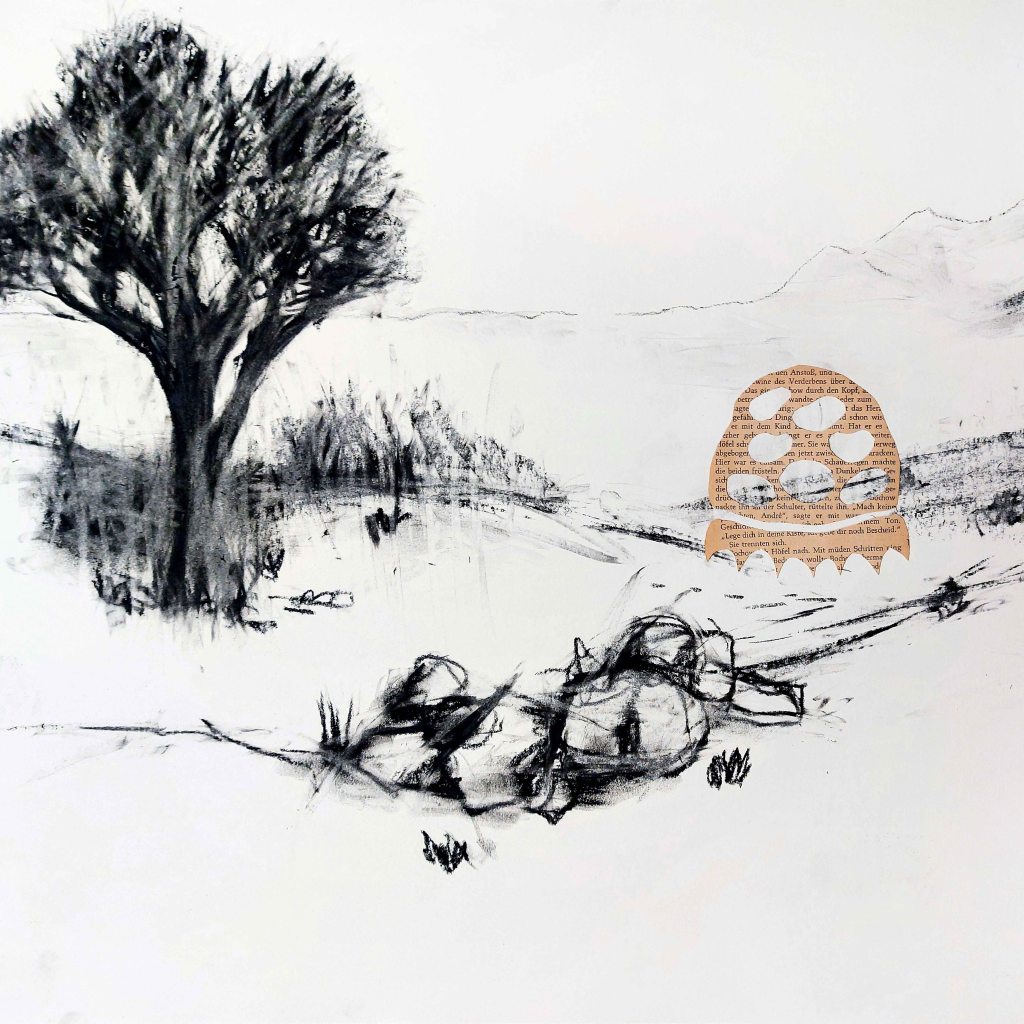
Die hier gezeigten Arbeiten bestehen hauptsächlich aus zwei größeren Werkserien: der “Roots & Branches”-Serie und den Werken, die aus ihrer mehrjährigen Forschung zu Termiten entstanden sind. In der “Roots & Branches”-Serie setzt sie sich mit dem Konzept von Verwurzelung und Wachstum auseinander, indem sie natürliche Materialien und Symboliken verwendet, um die Verbindung zwischen Mensch und Natur darzustellen. Ihre Forschung zu Termiten beleuchtet die komplexen sozialen Strukturen dieser Insekten und welche Lehren wir daraus ableiten können, was sie in ihren Werken durch detailreiche Darstellungen und innovative Techniken thematisiert.
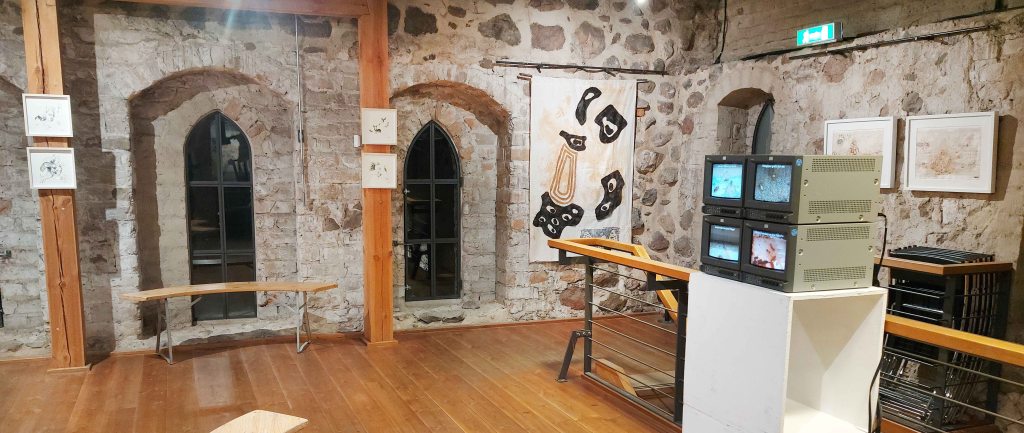
Diese Ausstellung bietet zudem einen kleinen Einblick in ihr vielseitiges Oeuvre, das von traditioneller Zeichnung über Mischtechniken, Fotografie und Installationen bis hin zu Performance- und Videoarbeiten reicht. Besondere Beachtung verdienen ihre Arbeiten mit natürlichen Pigmenten und Materialien, die sie zum Teil aus ihrer Heimat Namibia mitbringt oder vor Ort findet, sowie ihre experimentellen Ansätze, die oft partizipatorische Elemente und ortsspezifische Installationen umfassen.
Ich freue mich auf euern Besuch der Ausstellung, wo ihr neben meiner auch noch die tollen Arbeiten von Asta Volkensfeld, Andrea Engelmann und Alexandra Weidmann bewundern könnt!
Künstlerin und Filmemacher sind anwesend und laden im Anschluss zur Diskussion und Führung der Ausstellung ein.
Durch den Film lernt man Imke Rusts Arbeits- und Denkweise kennen. Man bekommt eine Einsicht in ihre ortsbezogene Arbeiten in der grandiosen namibischen Landschaft.
Die Ausstellung ist ein weiteres Zeugnis von Rusts tiefer Verbindung zur namibischen Natur und ihrem Wunsch die Zusammenhänge zu verstehen und sichtbar zu machen, in diesem Fall durch prozess-orientierte Arbeiten und künstlerisch-kreativen Forschungsansätzen.
Imke Rust führt im Anschluss zum Film durch die Ausstellung um einen tieferen Einblick in ihre Materialwahl, Vorgehensweise und Gedanken zu den Arbeiten zu geben. Dabei teilt sie ihr spannendes Wissen über afrikansiche Mythologie, wissenschaftliche Erkenntnissen zu Termiten und ihrem eigenen persönlichen Dialog mit diesen fazinierenden Wesen.
Wir freuen uns auf euch!
Die Ausstellung zeigt Textilarbeiten, Mixed-Media Collagen, Zeichnungen, Videos und Fotografien. Dauer der Ausstellung: 12.11.23 – 25.2.24 Öffnungszeiten: Mi – So und an Feiertagen von 13 – 17 Uhr
Trailer vom Film:
Synopsis des Films:
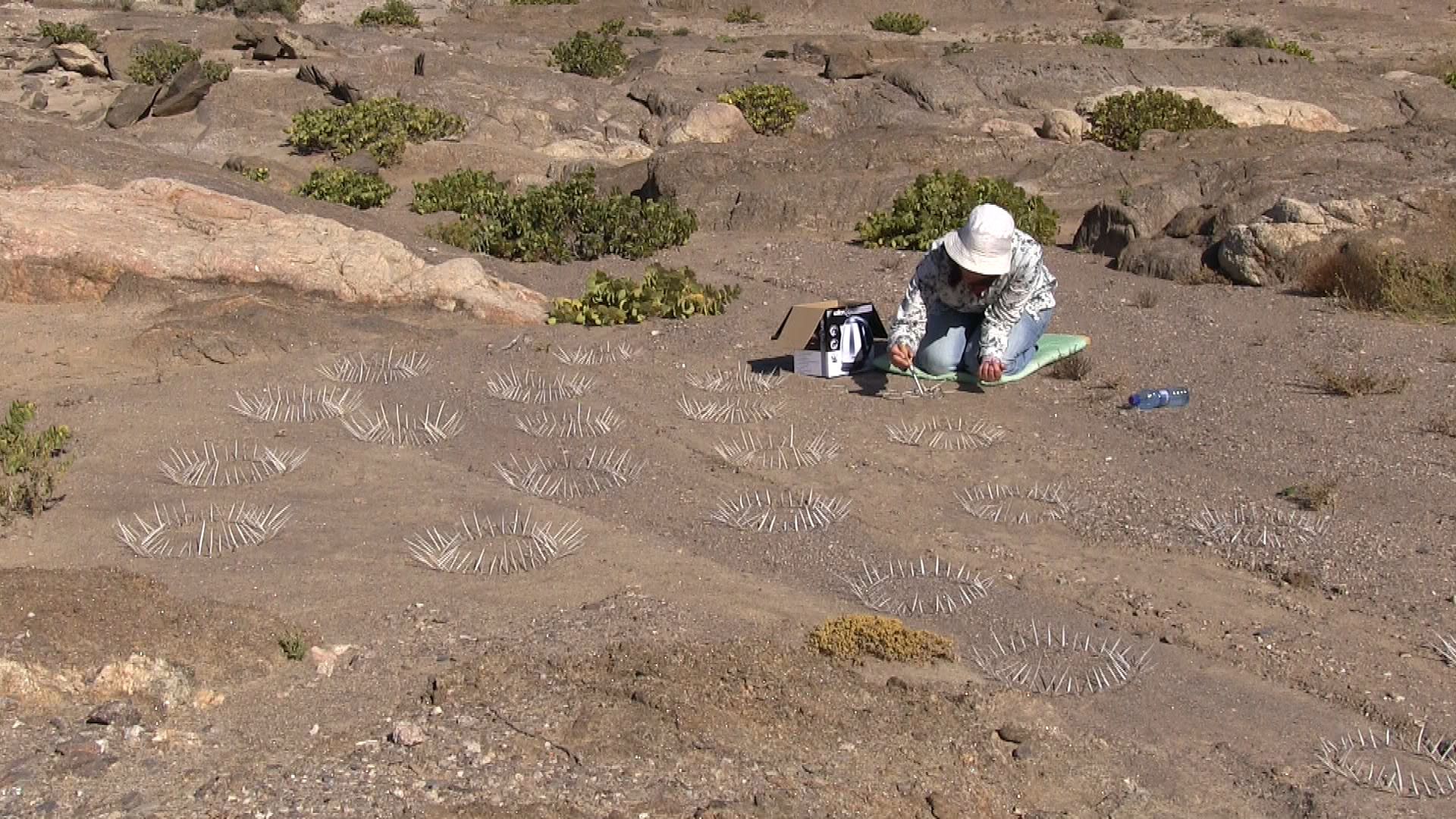
In der prallen Wüstensonne über 1000 Weißdornen zu Kreisen legen? Schwarze Müllsackrosen in die Sanddünen pflanzen? Oder eine halbe Tonne Salz zu einer begehbaren Skulptur formen?
Die Landart Installationen der Namibischen Künstlerin Imke Rust folgen einem immanenten Anliegen: Der Sorge über den zunehmenden Uranabbau in Namibia und der Verschandelung der Wüste. Ihre Kunstwerke sorgen für Aufmerksamkeit, verstehen sich aber auch als ein symbolischer Schutz für das geschundene Land.
Kann Kunst etwas bewirken? Was kann ich tun? Mit diesen Fragen beschäftigt sich Imke Rust auf eindringliche Weise.
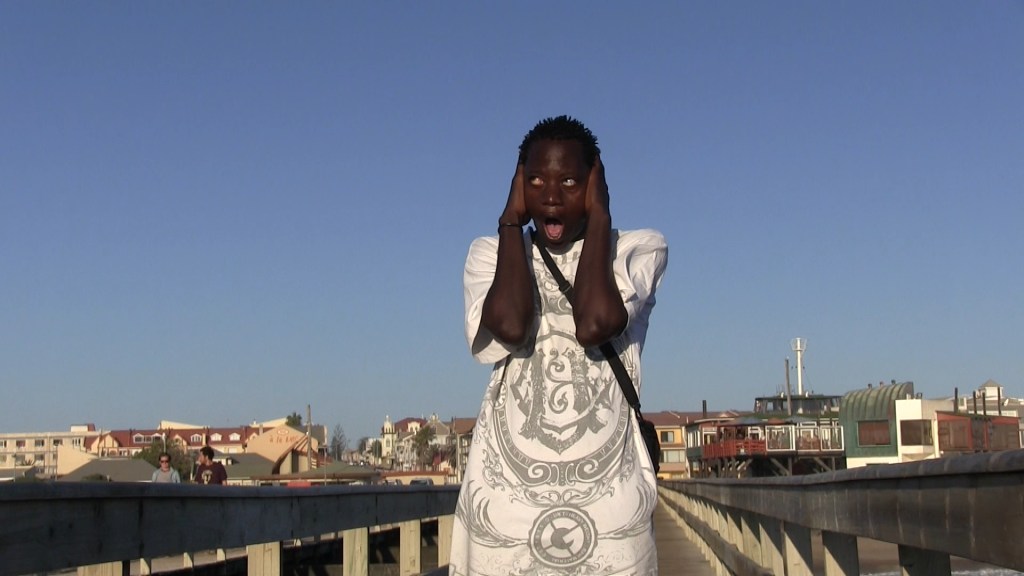
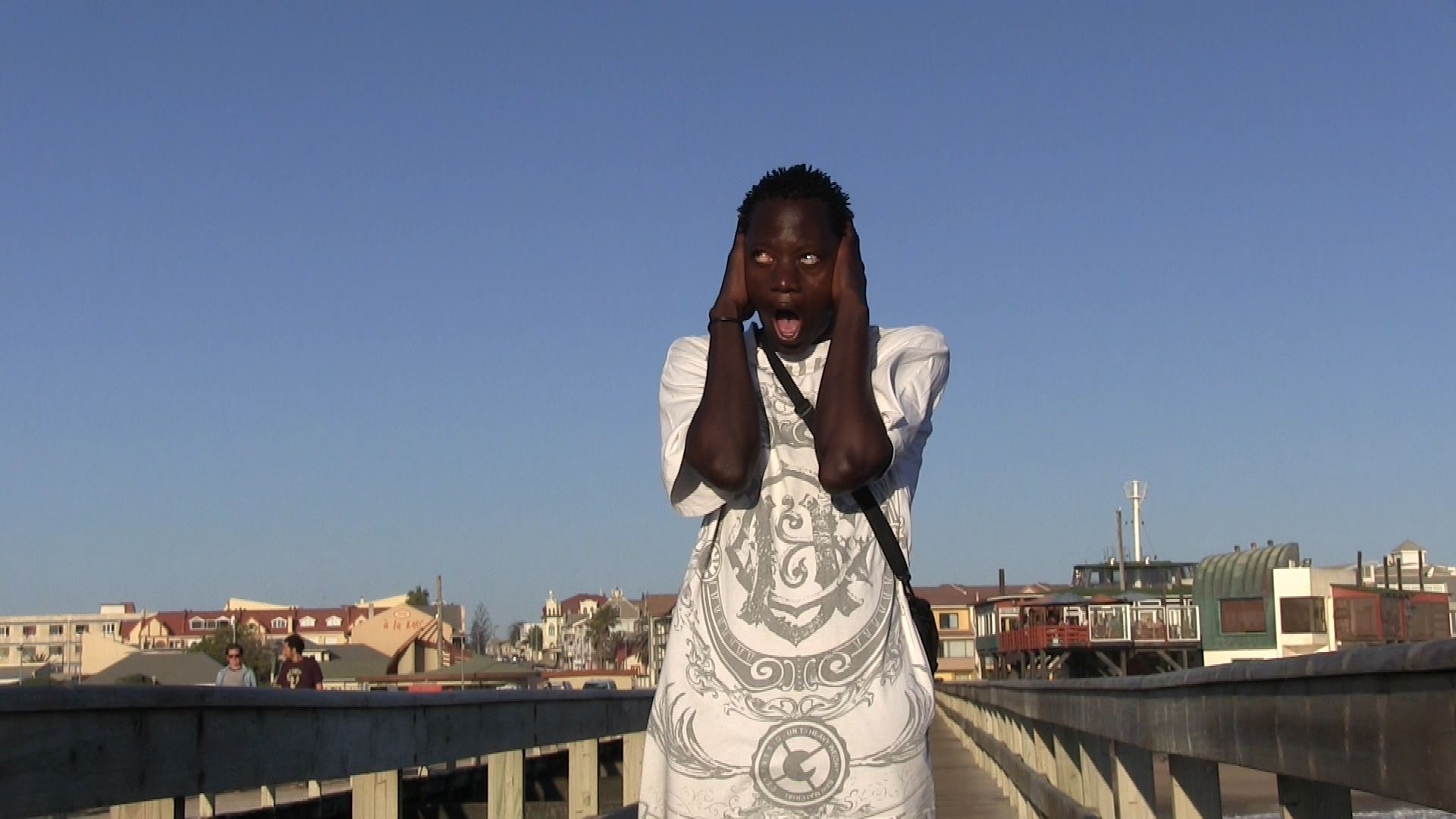
In 2012 in Namibia und Berlin gedreht, spiegelt der Film die teils meditative Stimmung der Entstehung von Rust’s Landart. Ruhige Einstellungen bei der Installation der „Salt Circles“ oder reportagige Handkamera bei der Videoperformance „The Scream“ auf der Seebrücke am Atlankik: Schnitt und Montage folgen dem Tempo der Kunst.
Die Absage der gebuchten Rust-Ausstellung seitens der Kunstvereinigung bringt dem Film eine dramaturgische Wendung und verlagert den Schwerpunkt hin zu einer gesellschaftlichen und medialen Kontroverse über die „Freiheit der Kunst“ in Namibia.
So organisiert sich die bekannte Künstlerin mit Hilfe durch ein Netzwerk von Unterstützern ihre Ausstellung einfach selbst.
Starke Bilder an atemberaubenden Orten, sowie Illustrationen und Musik verdichten den Film zu einem eindrucksvollen Statement für Courage und Eigeninitiative im eher konservativen Namibia.
Die Filmarbeit in Namibia wurde teilweise vom National Arts Council of Namibia unterstützt.
Dauer der Ausstellung: 12.11.23 – 25.2.24 Öffnungszeiten: Mi – So und an Feiertagen von 13 – 17 Uhr
und am
24.11.23 / 19Uhr zur Filmvorführung: An Infinite Scream(45min, Deutsch) von Steffen Holzkamp Über Imke Rusts Land Art und Umweltaktivismus in Namibia. Künstlerin und Filmemacher sind anwesend und laden im Anschluss zur Diskussion und Führung der Ausstellung ein.
Ich freue mich auf euch!!
Imke Rust nähert sich neugierig der geheimnisvollen Seele der Termiten. Dabei erforscht sie ihre eigene Verbindung zur Erde, den Sternen, ihrer afrikanischen Herkunft und der Mythologie durch eine intuitive, tiefe Wahrnehmung. Sie spürt mit allen Sinnen dem Urgefühl der Zusammengehörigkeit nach. Mit einer großen Vielfalt an Materialien und Formen schenkt sie ihren Entdeckungen Ausdruck, und entführt den Betrachter in eine mystische, aber sehr greifbare, fremde Welt.
English:
You are cordially invited to the opening of my solo exhibition
Listening to Mountains
An Intimate Dialog with Termites and Other Nature Beings
Dr. phil. Constanze Jaiser will introduce the artist.
Duration: 12.11.23 – 25.2.24 Opening times: Wed – Sun and on public holiday 13 – 17h00
and on
24.11.23 at 19h00 for the film screening: An Infinite Scream (45min, German) by Steffen Holzkamp About Imke Rust’s land art and environmental activism in Namibia. The artist and filmmaker will be present and invite you to a discussion and guided tour of the exhibition afterwards.
I am looking forward to welcoming you!!
With Listening to Mountains Imke Rust curiously approaches the mysterious soul of termites. In doing so, she explores her own connection to the earth, the stars, her African origins and mythology through an intuitive, deep perception. She traces the primal feeling of togetherness with all her senses. With a great variety of materials and forms, she gives expression to her discoveries, transporting the viewer into a mystical, but very tangible, alien world.
Szene aus ‘An Infinte Scream’ / Still from ‘An Infinite Scream’
Ich freue mich, das der Dokumentarfilm ‘An Infinite Scream’ über meine Land Art Arbeiten in Namibia beim Eugene Environmental Film Festival gezeigt wird.
Die Filme des hybriden Festivals können online aus der ganzen Welt oder auch vor Ort gesehen werden. Falls du den Film von Steffen Holzkamp noch nicht gesehen hast, oder noch einmal gucken willst, ist dies nun eine perfekte Gelegenheit.
(Wenn du den Film lieber in Deutsch sehen willst, dann kann ich dir einen privaten Link während dieser Zeit schicken. Bitte schicke mir dazu deine Email Adresse.)
ENGLISH: I am happy to announce that our documentary film ‘An Infinite Scream’ about my Land Art Project in Namibia, will be screened as part of the Eugene Environmental Film Festival ( 15-24 April 2022). The hybrid festival allows the films to be seen online from all over the world, as well as in person at the Broadway Metro, Eugene.
In case you have not seen this great documentary film by Steffen Holzkamp yet, or it you like to see it again, this is a perfect opportunity to do so!
This link takes you to the film. The film will be screened in English.
Von der Webpage vom/ from the webpage of the Eugene Environmental Film Festival:
“In partnership with The Center for Environmental Futures Emerald Earth Film Festival, we are hosting a hybrid festival!!
April 15th to April 24th, 2022!
Join us for an exploration of our commitment to each other and the environment. Journey and be witness to diverse cultures, traditions, species, beauty, adventure, ecosystems, sustainable practices, and resistance efforts to protect our planet. Envision a world that honors and celebrates voices, perspectives, experiences, and indigenous ways of knowing from around the world
April 15-April 22 films online – free & accessible to a global audience April 22-April 24 in-person Broadway Metro, Eugene OR http://www.broadwaymetro.com“
Szene aus ‘An Infinte Scream’ / Still from ‘An Infinite Scream’
and further down: an interview with Johan Adeström published in Söderhamns Kurieren (translated to English via the internet and copied here with kind permission.
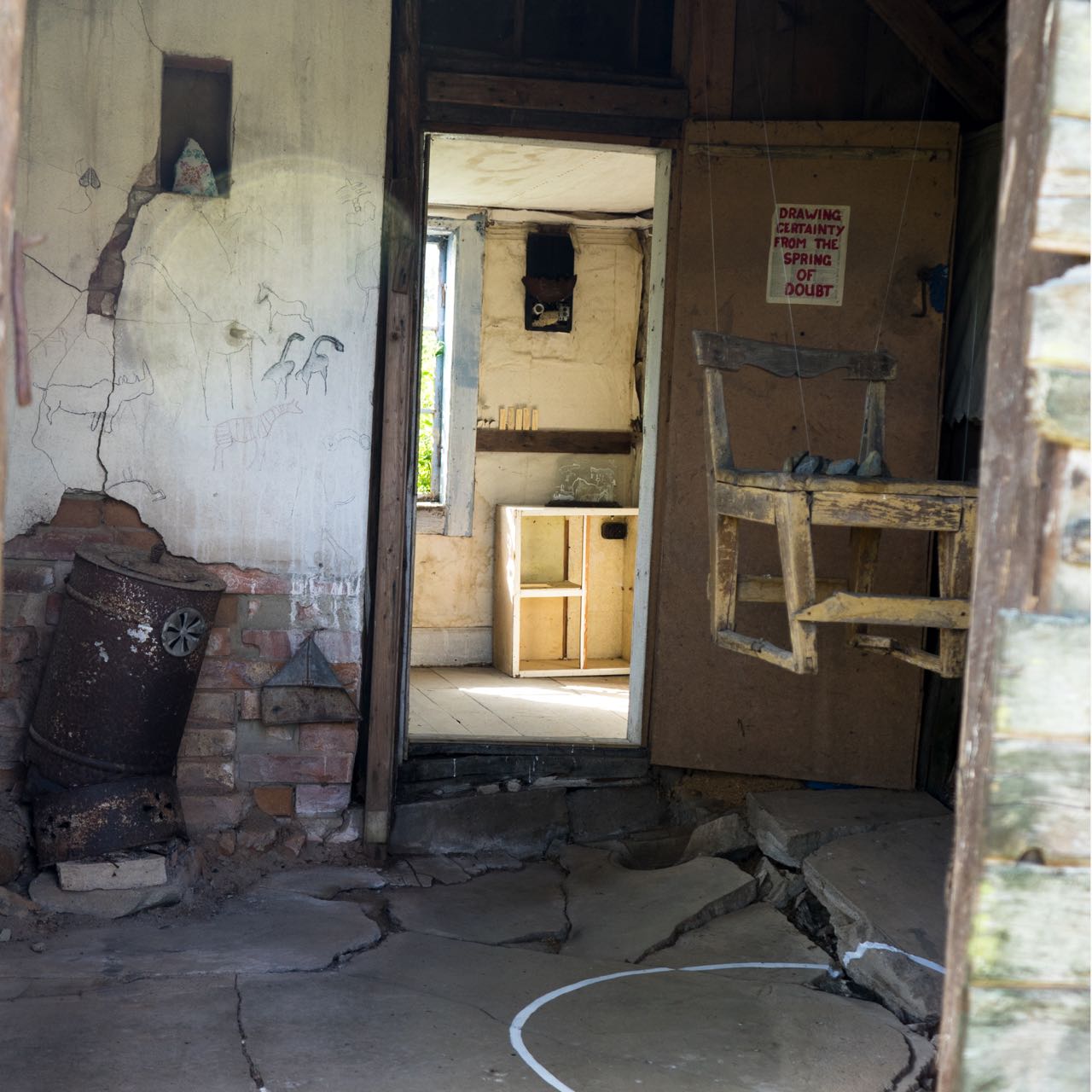
Imke Rust in her art installation ‘Drawing Certainty from the Spring of Doubt’, at Erik-Anders Farm, Asta, Sweden
IN a once derelict hut in Sweden, award-winning multidisciplinary artist Imke Rust draws the spirit of Twyfelfontein across space and time.
Her installation which connects the decorated farmhouses of Hälsingland and the famed site of ancient rock engravings in northern Namibia was created for this year’s World Heritage Scholarship.
Rust was awarded the residency from a crop of 101 applicants from 34 countries and spent four weeks living and working at Sweden’s Hälsingegården Erik-Anders and Kristofers Farm.
The scholarship invited artists to connect the aspirational and elaborately hand-painted farmhouses of Hälsingland with another Unesco World Heritage site and Rust quickly saw a link with the rock engravings of Twyfelfontein, some of which, like ‘Lion Man’ and ‘Dancing Kudu’, are said to depict shamanic rituals and trances.
“Both sites are not ‘mere decorations’ but are intentional creative interventions, which allow us to transcend into an alternative reality,” she says.
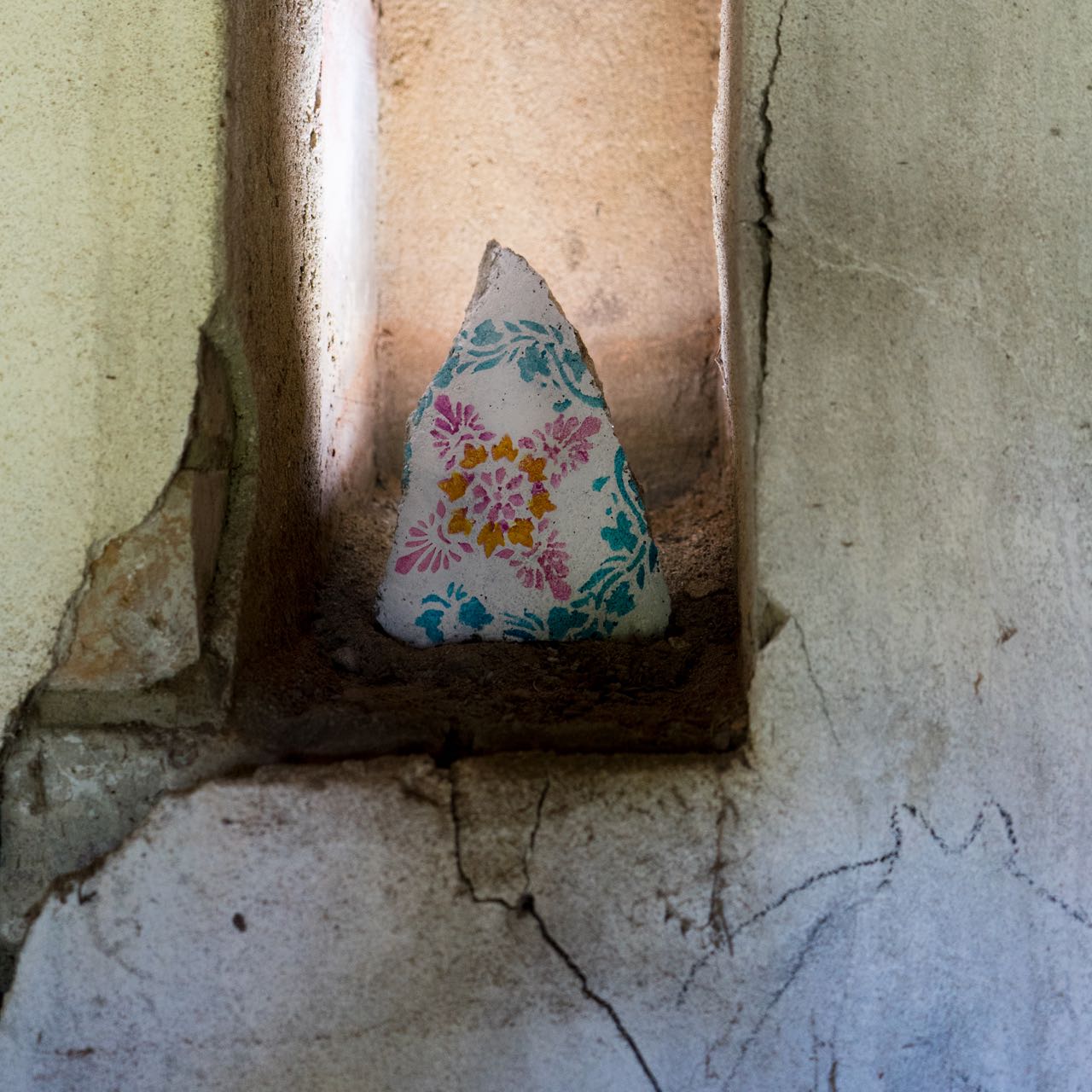
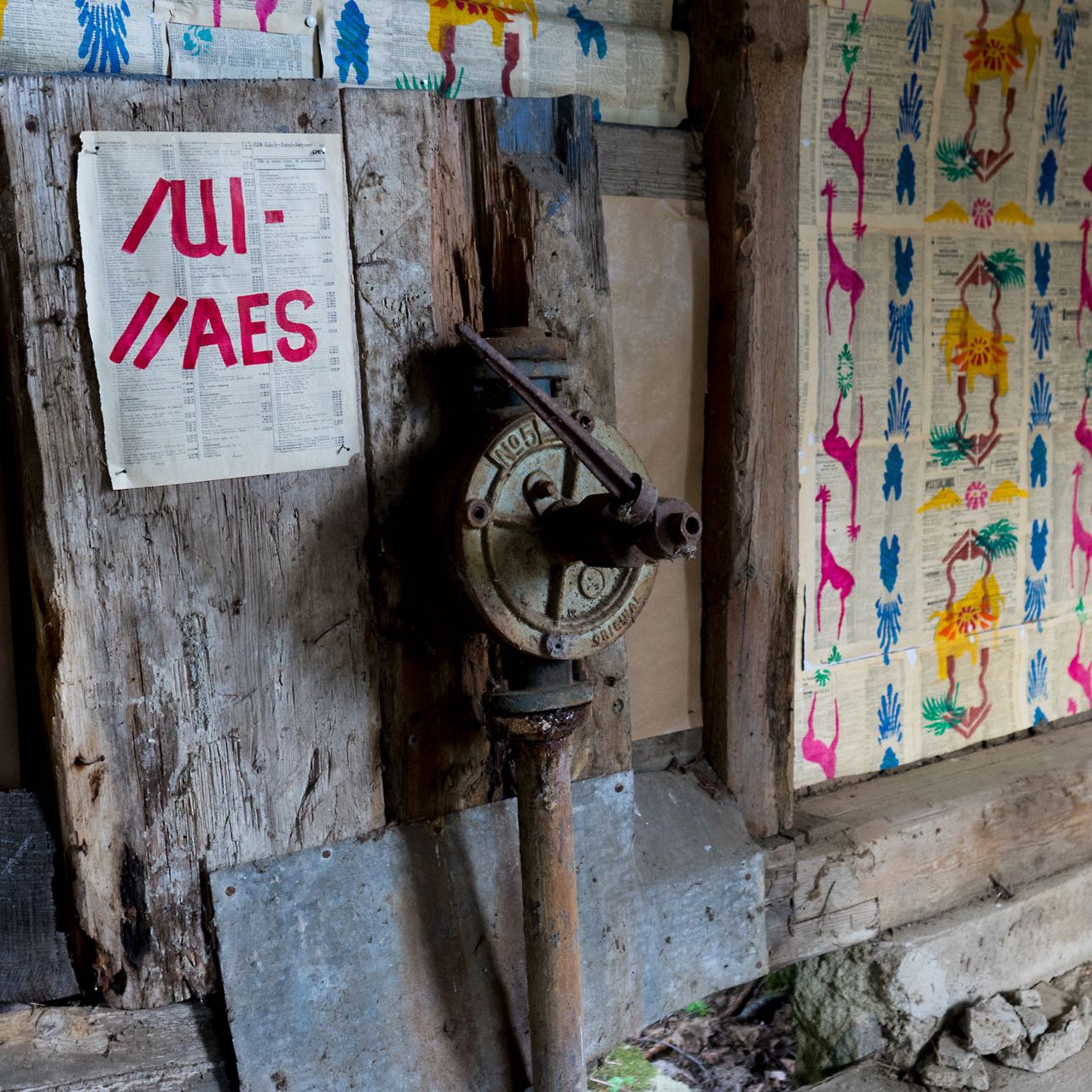
Transforming the hut into a fairy tale-like space by painting wallpaper in the style of the decorated Hälsingland farms while referencing Twyfelfontein in images rendered akin to the famed rock engravings, Rust engaged in a highly intuitive process that combined found natural and man-made objects with retro telephone book pages which culminate in an installation she titled ‘Drawing Certainty from the Spring of Doubt’.
Though the installation is in Sweden and draws on Twyfelfontein, Rust maintains that neither becomes the other.
“The installation creates a room where both sites are in correspondence with each other, without imposing one on the other. Correspondence is an open-ended, dialogical process of unfolding and becoming,” she says.
To Rust, this straddling and correspondence between realities, cultures, time and space, provides a unique opportunity for learning and connection.
“Maybe a bit like eavesdropping on a conversation between the two sites and making up your own story from the elements you recognise and the ones which seem strange and unfamiliar. Or like stumbling into an unknown cave and finding more and more treasures as you look, but not fully understanding them.”
Honoured to have her installation supported and on show at the Erik-Anders World Heritage site which receives around 30 000 visitors per year, Rust left Sweden with the feeling of having highlighted our shared humanness.
“One of the central ideas of my art and installation is to show how humans are much more alike than different,” Rust says.
“We marvel at the ‘other’ and how exotic they are, but once we look a bit closer, we can realise that we all have the same needs, hopes and fears.”
Visit imkerust.com to explore the installation online.
–martha@namibian.com.na; Martha Mukaiwa on Facebook and Instagram; marthamukaiwa.com
International artist weaves together world heritage from Africa and Hälsingland: “Feeling a bit like a curious child”
What do artistic elements in Hälsingland farms have in common with rock carvings from a world heritage site in Namibia?
“Quite a lot”, says the acclaimed Namibian artist Imke Rust, who for a month worked on an art project at Erik-Andersgården in Söderala.
This is the third time that the World Heritage Scholarship has been awarded by the Gävleborg Region. This year, the Namibian artist Imke Rust has received 5,000 euros to create art where two world heritage sites are linked: Twyfelfontein, an area with rock engravings in Namibia and Erik-Andersgården in Söderala.
This year, more than a hundred applications were received from 34 different countries, but the jury stuck to Imke Rust’s application.
She was born and raised in the Namibian capital Windhoek and has on two occasions received the country’s finest art award from the Namibian national art gallery. Nowadays she lives mostly in Germany.
The visit to Sweden is her first, and she did not know much about the country.
– I had an image that it is a well-ordered country far north, with cold winters, she says and smiles, after just having had experienced a hot summer.
Four weeks ago, she came empty-handed to Erik-Andersgården with the task of pursuing her creative idea: to interweave the Hälsinge farms in an interesting way with Namibia’s first world heritage site Twyfelfontein, which means the doubtful spring in Afrikaans, as there is not always water.
– From the beginning, I thought I would do something inside the house at Erik-Andersgården, but the ideas did not work completely, says Imke Rust.
And she is not an artist who works conventionally, strategically and goal-oriented. One of her watchwords is “trust the process”. Usually many small things must happen before the big thing falls into place.
“I had a vague idea, but I was also clear that I am open to the creative process to happen. The places and the material tell me what to do next. It’s like a dialogue. Communicating with the places and the objects and asking how they want to get together”, she says.
She prefers to call herself a multimedia artist. Which means that she uses what is available to take the creation forward.
“I love working like this, to just listen and feel and accept the process. In a way. But it can also be frustrating. As a person, I am really structured as well and like to have a plan for what to do. There may be some conflict …
– And of course I can feel stressed when I have a limited time of four weeks and I have received a scholarship where there are expectations. It can feel a little strange when people come and ask: How are you, what are you doing? And one can only answer: I do not know yet. But I have realized that this is how I work, she says.
But what began with empty hands and an empty sheet has now resulted in an art installation. A walk in the meadows around the farms in Söderala has now ended in a small abandoned cottage a few steps from Erik-Andersgården, which has been given new life.
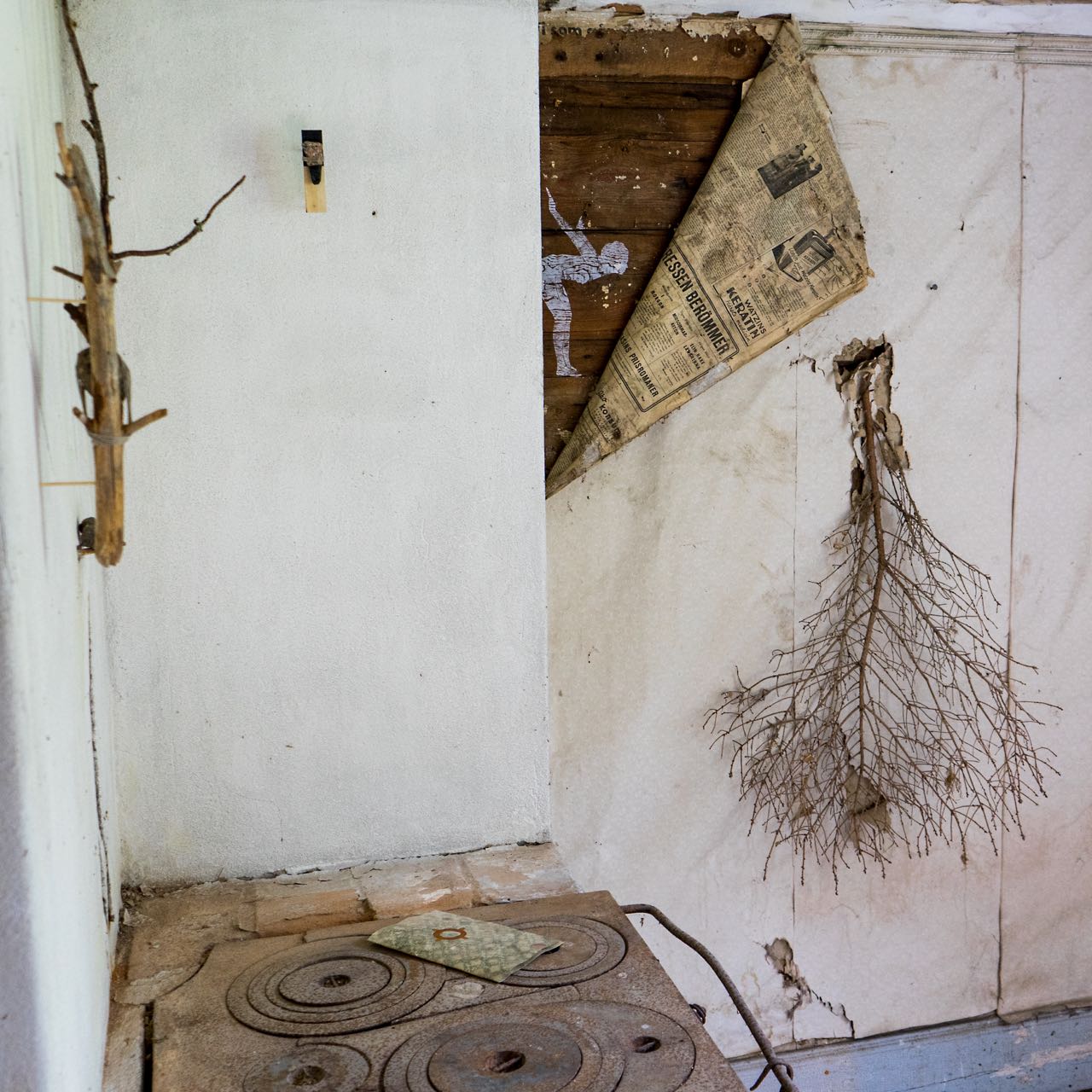
It with the help of old objects found in the cottage and with new elements of paintings from Twyfelfontein.
– The first thought is of course that there are totally different places from completely different parts of the world. But people have always decorated and used art to communicate and tell things. It does not matter if it was 5,000 years ago in Africa or 300 years ago in Hälsingland. The need is the same, says Imke Rust.
She describes the rock engravings in Twyfelfontein as a way to create an alternative reality. Something that has also been common in Hälsingland.
– Even in the Hälsinge farms, people painted and tried to imitate precious materials such as marble. To make it look more glamorous and finer than it really was.
The tiny cottage was abandoned and full of dust and debris, but also contained a wood stove, wooden chair and some other small items have now been given an alternative reality.
The walls are now decorated with old pages from a telephone directory with exotic painted animals similar to those in Twyfelfontein and small rock carvings in miniature.
– It was only in the last few days that everything came together. I have not really been able to show anything before now.
And how does it feel to leave it behind you now and leave here?
– Exciting and a little sad. I have put so much energy into it. But I like working with things that are non-permanent. When I open the door and walk away, perhaps nature and the rain will destroy it over time. It is also an interesting process…
– If you look in here, you may not understand everything immediately. But your mind will surely create new stories. I hope you feel a bit like a curious child when you look around here, says Imke Rust.
Johan Adeström for Söderhamns Kurieren, originally published in Swedish, translated via Google Translate.
(Text quoted from the original site of the The Decorated Farmhouses of Hälsingland.)
The Culture and Competence Board with Region Gävleborg has awarded the World Heritage Scholarship for 2021. It will go to artist Imke Rust, born in 1975 in Windhoek, Namibia, and now based in Oranienburg, Germany.
Imke Rust is an established artist and was educated at the University of South Africa, and other places. In her work she examines relationships between myth and reality, people and nature. She challenges common conceptions about what it’s like to be a person, and offers fresh perspectives. Imke Rust´s art is profoundly personal, and its aim is to create meaning through processes, narratives and materials, with a will to bridge gaps between cultures and continents, history and the present, and between people and nature.
It’s incredibly exciting that the World Heritage Scholarship has made its breakthrough this year, and that so many people from around the world have applied. With this year’s World Heritage Scholarship we are also connecting two fascinating world heritages on two continents through art. The very keynote of world heritage, says Magnus Svensson (C), Chairman of the Culture and Competence Board.
Motivation:
Farmers in Hälsingland built and decorated many beautiful farms during the mid-1800s. Thousands of years earlier, hunters and gatherers in Namibia meticulously decorated the surrounding landscape with rock carvings, showing scenes of animals, people and abstract patterns. This year’s World Heritage Scholarship holder, artist Imke Rust, grew up on a farm in Namibia, but has been living and working for some time in Oranienburg in Germany. She sees a direct link between the Hälsingegårdar World Heritage and Namibia’s first world heritage; Twyfelfontein.
Example of a Namibian rock painting scene
The World Heritage Scholarship has made a real breakthrough this year. 101 applications were submitted in total – 42 national and 59 international. They have come from 34 different countries: Indonesia, Italy, Germany, Egypt, Spain, India, France, Portugal, Namibia, USA, Syria, Algeria, the Czech Republic, Ethiopia, Bangladesh, Canada, Colombia, Austria, Finland, the United Kingdom, Denmark, Singapore, Mexico, Iceland, Hungary, Serbia, Cyprus, Nepal, Zambia, Greece, Poland, Iran, Japan and Sweden.
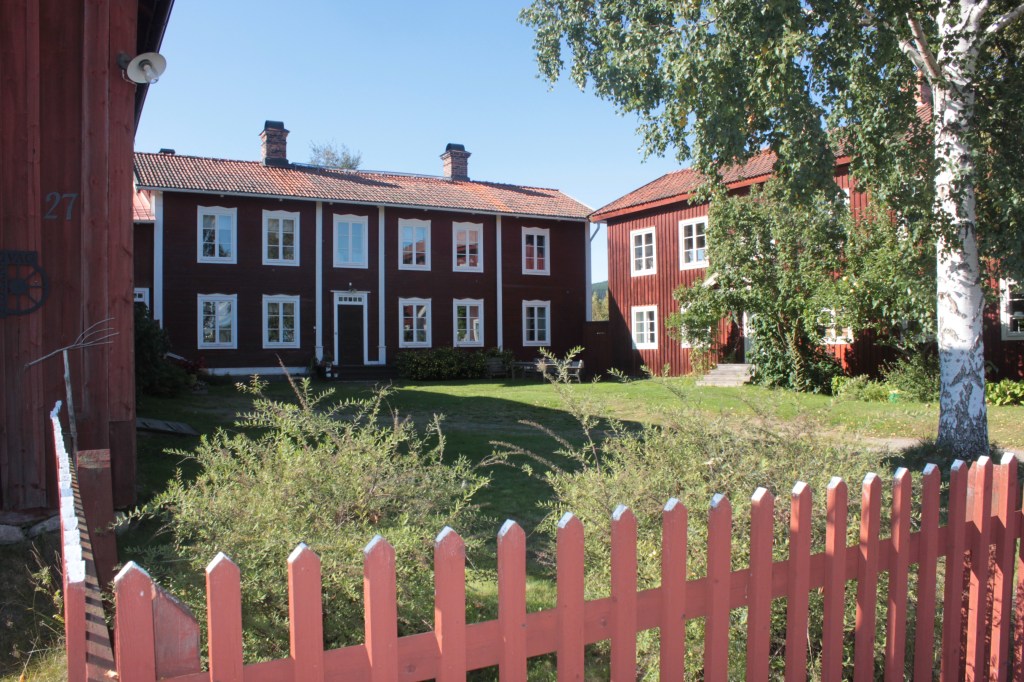
Example image of an interior of a decorated farm house. (Svenska: Jon-Lars, Image by Sanna.lonngren)Example image of the Swedish farmhouses (Svenska: Gästgivars med den högra byggnaden. Author: Catasa)
Wenn die Tage lang und einsam werden – Land Art Film gucken (Deutsch weiter unten)
SubRosa by Imke Rust – Film Still
The times are crazy and many people around the world are asked to stay at home and avoid social contact. So we thought the time is perfect to finally make our documentary film An Infinite Scream freely accessible to everyone via the Internet.
Also, because the documentary and the artworks have a strong and inspiring message of encouragement to find ways of becoming actively involved in creating the changes we want to see.
And, the good part is that it is available in English and in German!
You are welcome to share the link and we would love to hear your thoughts once you have watched it.
Please take care and stay healthy!
English:
Concerned about the ever-increasing uranium mining in Namibia a local artist sets out to give the Namib Desert a voice: An Infinite Scream
Thousands of thorns arranged into traps in the blistering desert heat? Black rubbish bag roses planted between dunes or half a ton of salt poured into six huge circles?
Imke Rust’s land art installations not only show her concern about the extent of exploitation and pollution happening in the Namib Desert. They are also an attempt to symbolically protect the land and raising awareness about the effects of the ever-growing uranium mining industry.
Can art be an invocation for change?
Shot in 2012 in Namibia and Berlin, Holzkamp’s approach is determined by the nature and pace of Rust’s artworks. Meditative sequences documenting the making of the “Salt Circles” are followed by reportage style filming of the “The Scream”, an art action at the Atlantic coast.
When the local arts association unexpectedly rejects Rust’s exhibition, the film takes a dramaturgical turn and shifts the focus to the ensuing controversy about freedom of arts in Namibia. The well-known artist, with the help of a network of supporters, now finds alternative ways to ensure her works will be seen.
Strong imagery, breath-taking locations and atmospheric music weave the film into an impressive portrait of courage and initiative in a rather conservative society.
Filming on location in Namibia was supported in part by the National Arts Council of Namibia.
Title: An Infinite Scream Documentary English/German 45min 2012-13Produced on location in Namibia and Berlin.
Director & Producer: Steffen Holzkamp Filmmaker and musician based in Berlin.
Stills from the film.
Wenn die Tage lang und einsam werden…
Die Zeiten sind verrückt und viele Leute überall in der Welt sollen Zuhause bleiben und soziale Kontakte vermeiden. Also dachten wir uns, es ist die perfekte Zeit unseren Dokumentarfilm ‚An Infinite Scream’ für alle frei zugänglich im Internet zu veröffentlichen.
Auch weil der Film und die Kunst eine starke, inspirierende Botschaft haben, die uns ermutigt die Veränderungen die wir gerne in der Welt sehen wollen, aktiv und kreativ selbst mit zu gestalten.
Den Film gibt es in English (Original) und Deutsch (Overvoice).
Der Link kann gerne geteilt werden und wir freuen uns natürlich wenn ihr eure Gedanken zu dem Film mit uns teilt.
Bitte pass dich auf und bleib gesund!
Deutsch:
Ein Dokumentar Film von Steffen Holzkamp
Synopsis:
In der prallen Wüstensonne über 1000 Weißdornen zu Kreisen legen? Schwarze Müllsackrosen in die Sanddünen pflanzen? Oder eine halbe Tonne Salz zu einer begehbaren Skulptur formen?
Die Landart Installationen der Namibischen Künstlerin Imke Rust folgen einem immanenten Anliegen: Der Sorge über den zunehmenden Uranabbau in Namibia und der Verschandelung der Wüste. Ihre Kunstwerke sorgen für Aufmerksamkeit, verstehen sich aber auch als ein symbolischer Schutz für das geschundene Land.
Kann Kunst etwas bewirken? Was kann ich tun? Mit diesen Fragen beschäftigt sich Imke Rust auf eindringliche Weise.
In 2012 in Namibia und Berlin gedreht, spiegelt der Film die teils meditative Stimmung der Entstehung von Rust’s Landart. Ruhige Einstellungen bei der Installation der „Salt Circles“ oder reportagige Handkamera bei der Videoperformance „The Scream“ auf der Seebrücke am Atlankik: Schnitt und Montage folgen dem Tempo der Kunst.
Die Absage der gebuchten Rust-Ausstellung seitens der Kunstvereinigung bringt dem Film eine dramaturgische Wendung und verlagert den Schwerpunkt hin zu einer gesellschaftlichen und medialen Kontroverse über die „Freiheit der Kunst“ in Namibia.
So organisiert sich die bekannte Künstlerin mit Hilfe durch ein Netzwerk von Unterstützern ihre Ausstellung einfach selbst.
Starke Bilder an atemberaubenden Orten, sowie Illustrationen und Musik verdichten den Film zu einem eindrucksvollen Statement für Courage und Eigeninitiative im eher konservativen Namibia.
Die Filmarbeit in Namibia wurde teilweise vom National Arts Council of Namibia unterstützt. Originaltitel: An Infinite Scream Trailer: aninfinitescream.wordpress.com Produktionsland: Namibia / Deutschland Produktionsjahr: 2012 – 2013 Erscheinungsjahr: 2013 Spieldauer: 45 Minuten Genre: Kunst/Kultur/Musik & Portrait Regie & Kamera: Steffen Holzkamp / ONEXA-AV
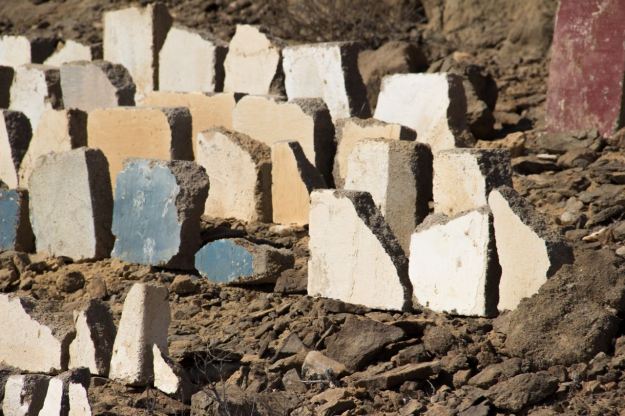
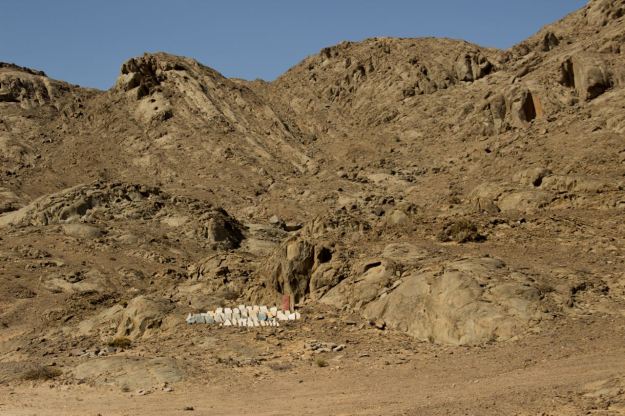
I love to go out and create art with only the things the site offeres to me. No special tools, no extra material – just responding to the site and conditions I find.
When we went to explore the barren Rössing mountain I found some building rubble. To my surprise it even had some colour on it… And so this work was created with the generous and unexpected colourful offerings of the Rössing mountain.
It was really hot, as usual, in the desert. The pieces of rubble were rough, heavy and hot. And many were full of sand, which needed to be removed to show the colour. At several times I thought “Ok, that’s it, that’s enough… I am done, let’s go rather home.”.
I should have brought some gloves… – somehow I never do, and if I do, I hate wearing them. And we should have come here closer to the sun-setting, when it has cooled down – I am not sure why I forgot about this essential point?
In the end there were more and more colourful pieces which I just had to add. My hands were blistered ands scratched, but I was happy and grateful for these fragments of colour in an otherwise pretty desolate surrounding.
Here is a short video, where you can see it all happening:
And once again, I cannot tell you how cool it is that my husband enjoys joining me in my art outings and filming the process. Now that he also owns a small drone, there is another cool perspective in his short videos. This one is a bit longer (2:50min) but the landscape is so breathtaking and unique, that I think you will not mind watching it till the end. His video work and audio is a beautiful artwork in its own right.
Between all the rubble I found one piece of broken, delicate china. Although it did not really fit with the rest, I just had to give it a space in this abstract city.
I hope you enjoy these images and the video as much as I do!
I am so excited to share this news with you!! (Deutscher Text weiter unten)
The Iwalewahaus from the University of Bayreuth has acquired two art series from me. The Iwalewahaus has a great collection of modern and contemporary visual art and popular culture from Africa, Asia and the Pacific regions, which is unrivalled in Germany.
I feel immensely honoured and very happy that my works will become part of this unique publicly accessible collection.
Both works
are about the Namibian colonial history and how we are dealing with it today.
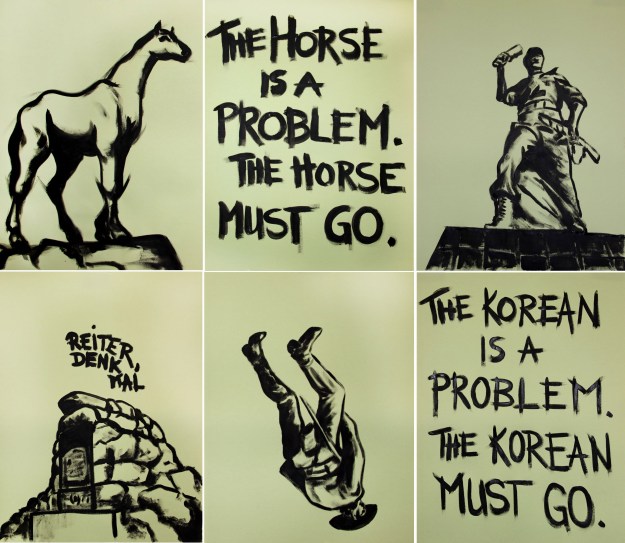
The Horse is a Problem. The Horse Must Go. Imke Rust, 6 sheets, Acrylic on green paper, 60x50cm each
‚The Horse
is a Problem. The Horse Must Go.’ Consists of six works (Acrylic on green
paper, 60 x 50cm each) which relate to the equestrian monument from colonial times, as well as the new statue of an
unknown soldier erected on Heroe’s Acre by Koreans. The title derives from a
speech made by former president Pohamba.
While the German-speaking Namibians
speak of the Reiter (Rider), English-speakers usually refer to the Horse, when
they speak about the equestrian monument. This difference in interpretation and
naming is interesting, as it shows our differences in perception and thinking.
Both, horse and rider, form a part of something bigger, which again is symbolic
of something else. Some people want to save the rider others see the horse as
the root of the problem. As long as we are not prepared to call the problems by
their real names, acknowledge all parts and search for a joint solution it will
be a challenge and we will fight about something very superficial.
Added to that, is the fact that the
modern statues are no less problematic. Statues which were build after
independence to unify the nation and celebrate more recent heroes of the
independence struggle have been ordered from an Asian catalogue and installed
by the North-Koreans. Hardly any Namibian can really identify with these statues,
especially since they look more Asian than Namibian.
Who Cares About the Horse? Imke Rust, Mixed Media on paper, 3 sheets, each 29 x 21cm
The second series which was bought is entitled: ‘Who Cares About the Horse?’.
It consists of three pages (mixed media on paper, 29 x 21cm each). In 2008, South African artist William Kentridge showed the video artwork ‘I am not me, the horse is not mine.’ The title speaks of the denial of guilt and this has inspired my series of works. Each page shows an image from the German colonial times in Namibia. The first page shows a young Herero boy with a horse and the typed text ‘I am me. The horse is not mine.’ The second page shows a German officer on his horse and the text ‘I am me. The horse is mine.’ The third page shows a Herero man on a riding ox and the text ‘I am me. Who cares about the horse?’
This light-hearted work reminds us, to be stand by who we are, acknowledge the guilt we all carry and then we can find alternative, peaceful solutions which make the question about the ‘horse’ redundant.
Ich freue mich, diese Neuigkeiten teilen zu können – Deutsch
Das Iwalewahaus der Universität von Bayreuth hat zwei meiner Arbeitsserien für ihre Sammlung angekauft. Das Iwalewahaus verfügt über eine in Deutschland einzigartige Sammlung moderner und zeitgenössischer bildender Kunst und populärer Kultur aus Afrika, Asien und dem pazifischen Raum.
Es ist für mich eine große Ehre und eine besondere Freude,
das meine Arbeiten nun in dieser einzigartigen Sammlung öffentlich zugänglich
sein werden.
Die beiden Arbeiten befassen sich mit der namibischen Kolonialgeschichte
und unseren heutigen Umgang mit ihr.
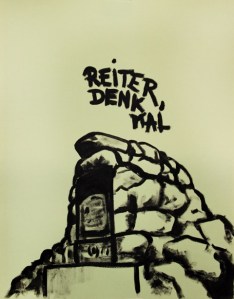
Detail: Reiter, denk mal
‚The Horse is a Problem. The Horse Must Go.’ Besteht aus sechs
Blättern (Acrylic auf grünem Papier, je 60 x 50cm) die sich mit dem Umgang mit
dem Reiterdenkmal aus der Kolonialzeit, aber auch der Statue des unbekannten
Soldaten die von Nordkorea auf dem Heldenacker errichtet wurde, befassen. Der
Titel ist von einer Aussage des ehemaligen Präsidenten Pohamba abgeleitet.
Während die Deutschen vom Reiterdenkmal reden, wird von Anderssprachigen meist nur von dem Pferd geredet. Schon in diesen unterschiedlichen Interpretationen von einer Sache sehe ich interessante Andeutungen, wie unterschiedlich wir denken und die Situation wahrnehmen. Beides, Pferd und Reiter, sind Teil eines Ganzen und Sinnbild für etwas anderes. Die einen wollen den Reiter erhalten, die anderen sehen das Pferd als Problem. Solange wir nicht bereit sind die eigentlichen Probleme beim Namen zu nennen, alle ihre Teile anzuerkennen und dafür gemeinsam Lösungen zu finden, ist es schwierig und wir streiten uns sehr emotional um Oberflächliches.
Dazu kommt, das die neuen Denkmäler oft nicht weniger zwiespältig
zu deuten sind. Denkmäler die nach der Unabhängigkeit die Bevölkerung vereinen
sollen und die Helden des Unabhänigkeitskampfes feiern, wurden aus einem Nordkoreanischem
Katalog bestellt und auch von ihnen angefertigt. Identitätsstiftend wirken sie
kaum auf irgendeinen ein Namibier, zumal sie meist ehr asiatische Gesichtszüge
aufweisen als namibische.
Die zweite Arbeitsserie die angekauft wurde heißt: ‚Who Cares About the Horse?’ und besteht aus drei Blättern (Mischtechnik auf Papier, je 29 x 21cm).
In 2008 zeigte der Südafrikanische Künstler William Kentridge eine Videoarbeit ‚I am not me, the horse is not mine.’ Der Titel, der von einer Schuldabweisung spricht, hat diese Serie inspiriert. Auf jedem Blatt ist ein Bild aus der deutschen Kolonialzeit zu sehen. Auf dem ersten ist ein Herero Junge mit einem Pferd zu sehen, dazu der Text: ‚I am me. The Horse is not mine’. Das zweite zeigt einen Schutztruppler, hoch zu Ross, dazu der Text ‚I am me. The horse is mine.’ Das dritte Bild zeigt einen Herero auf einem Reitochsen mit dem Text ‚I am me. Who cares about the horse?’
Diese Arbeit soll auf eine lustige Weise daran erinnern, das
wir alle ehrlich dazu stehen sollten wer sie sind und welche Schuld wir alle
tragen. Dann wäre es vielleicht einfacher uns auf alternative Lösungen zu konzentrieren
und die die Frage nach dem ‚Pferd’ überflüssig machen.
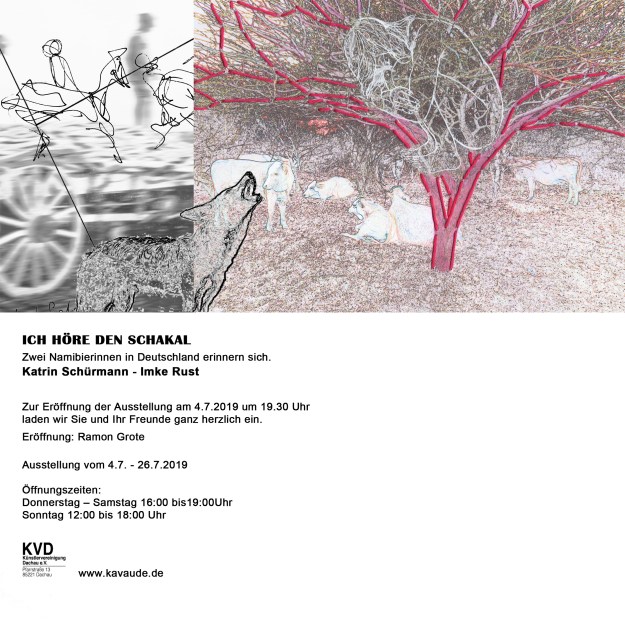
Katrin Schürmann and Imke Rust
will be exhibiting
at the Galerie der KVD in Dachau.
Opening on the 4th of July @ 19h30
Save the date! And please share with your friends in the area!
Hope to see you there! 😃 Ich freue mich euch dort zu sehen!
About the exhibition: (für den deutschen Text, bitte runter – scrollen)
Katrin Schürmann (1944) and me (1975) have a very interesting connection: we both grew up on the same farm in Namibia and we went to the same school in Swakopmund. We both are artists and both are now living in Germany.
Having met in 2017 at my exhibition in Munich we have kept in contact via email and exchanged memories and thoughts about the farm and our connection. Katrin Schürmann soon invited me to join her in an exhibition exploring this unique connection that we have.
After her studies Katrin Schürmann left Namibia to work in Germany and stayed ever since. In 1984 her mother sold their family farm Otukarru to my parents. So, just like Katrin, I spent a big part of my youth on the farm. Since my family is still farming there, I am also visiting as often as I can.
How do two artists of different generations relate to the same piece of land? How do the perspectives differ because of time, memory and physical and emotional distance? Where do the perceptions differ? Where are they similar. How do the artists each deal not only with their personal histories, but also the colonial history? Especially in the current times, when it is important to critically question the history of land ownership in Namibia.
Both artists feel a strong connection to nature and Namibia’s vast spaces, the desert and the bush. Katrin works with abstract minimalism. Her monotypes and installations reflect the the barrenness of the land.
I am showing mixed media works, drawings and video works, which are mostly abstract figurative and explore my direct relation to the farm which I still call home. I am questioning the idealisation of and my ambivalent feeling towards the farm life. Current happenings, such as the drought, poaching incidents and the political call for land expropriation of white farmers, affect me directly and are expressed in my works.
Imke Rust ‘Rinderpest’ Mixed Media on paper, 68 x 82cm
Deutsch:
Wer entsinnt sich nicht an den Satz, der am Anfang des Romans von Tanya Blixen und einem sehr erfolgreichen Film steht: „Ich hatte eine Farm in Afrika“. Diese Aussage trifft auch auf die beiden Ausstellerinnen zu. Er prägte ihre Jugend.
Es ist nicht nur die Kindheit in Afrika, die Katrin Schürmann (1944) und Imke Rust (1975) verbindet – sie wuchsen auf derselben Farm in Namibia auf, gingen zur selben Schule in einem 300 Kilometer entfernten Dorf an der Küste, mitten in der Wüste. Dies alles stellte sich heraus, als sich die beiden Frauen zum ersten Mal trafen anlässlich einer Ausstellung von Imke Rust 2017 in der Pasinger Fabrik in München. Die beiden gehören verschiedenen Generationen an, die eine lebt heutzutage in Berlin, die andere in München.
Gemeinsam ist den beiden Künstlerinnen sicherlich die Liebe zur Natur, zu den endlosen Weiten der afrikanischen Savanne und der Wüste. Dieses drückt sich in der Arbeiten von Katrin Schürmann eher in minimalistischen, reduzierten Abstraktionen aus. Die Kargheit des Landes spiegelt sich in einfachen und direkten Darstellungen (Monotypien und Installationen) wider.
Ganz anders sind die Arbeiten von Imke Rust einzuordnen. Die gebürtige Namibierin, die erst vor kurzem nach Deutschland kam, weist auf politische Entwicklungen hin, bringt eine zwiespältige Reflektion zum Ausdruck, denn beide Künstlerinnen müssen sich heutzutage fragen, unter welchen Umständen diese Farm zur Kolonialzeit in Deutschen Besitz kam.
Imke Rust ist regelmäßig in ihrer Heimat und auf der elterlichen Farm. Somit ist sie immer wieder mit den aktuellen Geschehnissen dort konfrontiert. Ob Trockenheit, Wilderei oder die Forderungen nach Landenteignungen weißer Farmer – vieles berührt sie direkt und spiegelt sich in ihren Werken wieder
Imke Rust zeigt Arbeiten die auf der elterlichen Farm in Namibia entstanden sind oder in direkter Beziehung dazu stehen. Sie arbeitet multimedial und vorzugsweise direkt in der Natur, welches sie in Fotografien, Zeichnungen und Videoarbeiten dokumentiert und zeigt.
Für die geplante Ausstellung befassen sich beide Künstlerinnen mit ihrer Beziehung zu dem Land Namibia, aber auch dem Stückchen Land auf dem beide aufgewachsen sind und das für sie lange ihr Zuhause war. Wie sehen sie ihre persönliche Beziehung zu dem Land und seiner Geschichte? Welche Ähnlichkeiten und Unterschiede gibt es in der Wahrnehmung? Gerade in der jetzigen Zeit, wo Deutschland von den Herero zur Verantwortung für ihre koloniale Geschichte gezogen wird, ist eine kritische und persönliche Hinterfragung was es denn bedeutet „eine Farm in Afrika gehabt zu haben?“ spannend und wesentlich.





















 Imke Rust