
…and I sensed an infinite scream passing through the Namib
A critical artistic exploration of socio-ecological conflict in the Namib Desert
Imke Rust
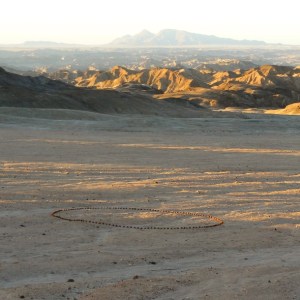
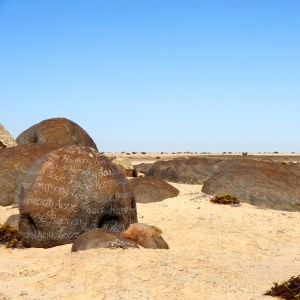
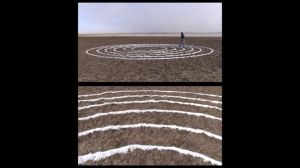
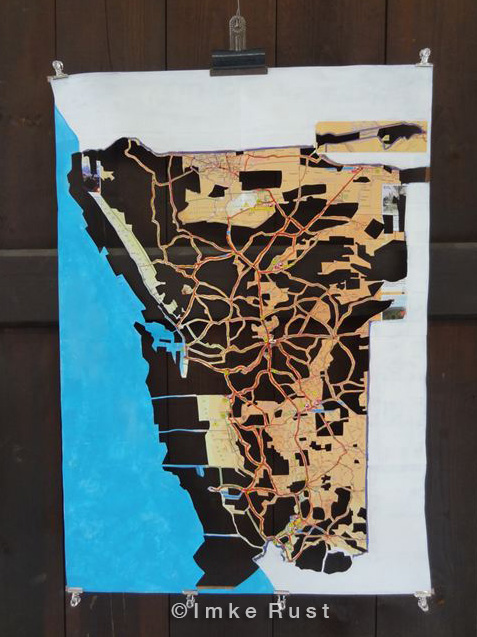
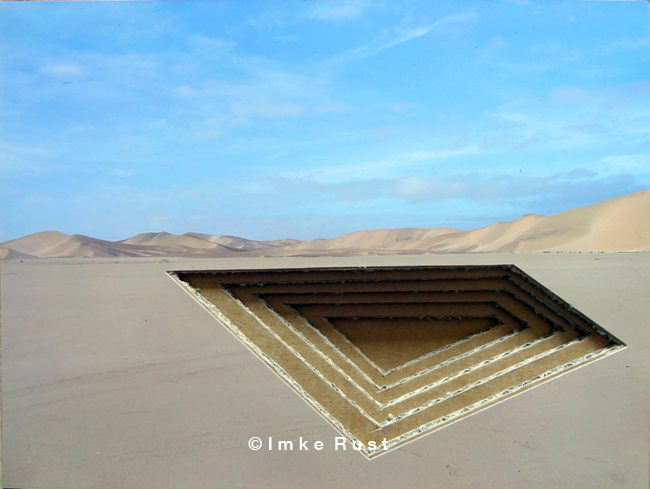
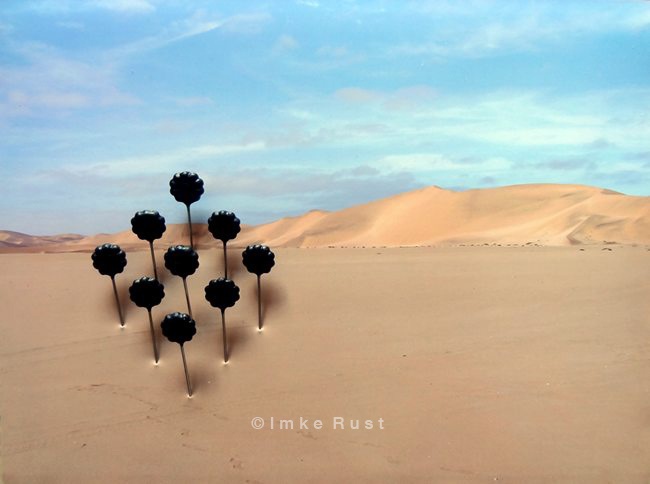
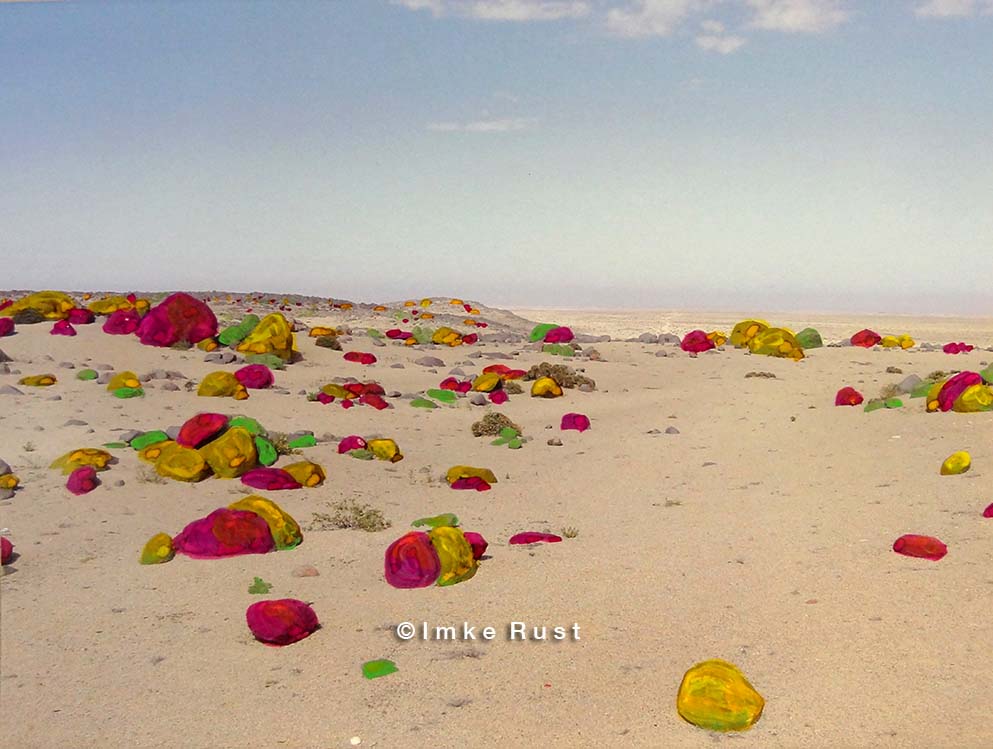
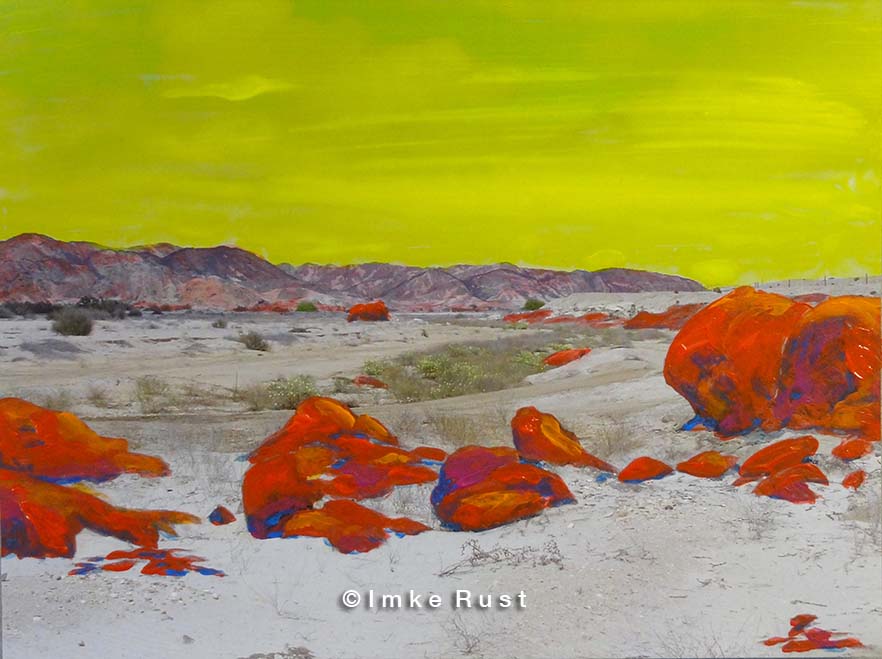
During 2012–13, Imke Rust undertook a profound and ambitious land-art project in the Namib Desert, responding to the mounting socio-ecological pressures posed by accelerated uranium mining and industrial expansion along Namibia’s fragile coastline. Rather than staging a conventional show, she embarked on a research-driven investigation — creating a series of temporary site-specific interventions that probe environmental vulnerability, extractive economies, and community responsibility.
Conceptual Framework
Rust’s work in this project is rooted in her long-standing connection to the Namib landscape: both deeply personal and politically urgent. Through her interventions, she articulates a vision that is neither purely critical nor purely hopeful. The practice oscillates between warning and care: documenting bleak futures if extractive activities prevail, yet also reminding viewers of their capacity to act.
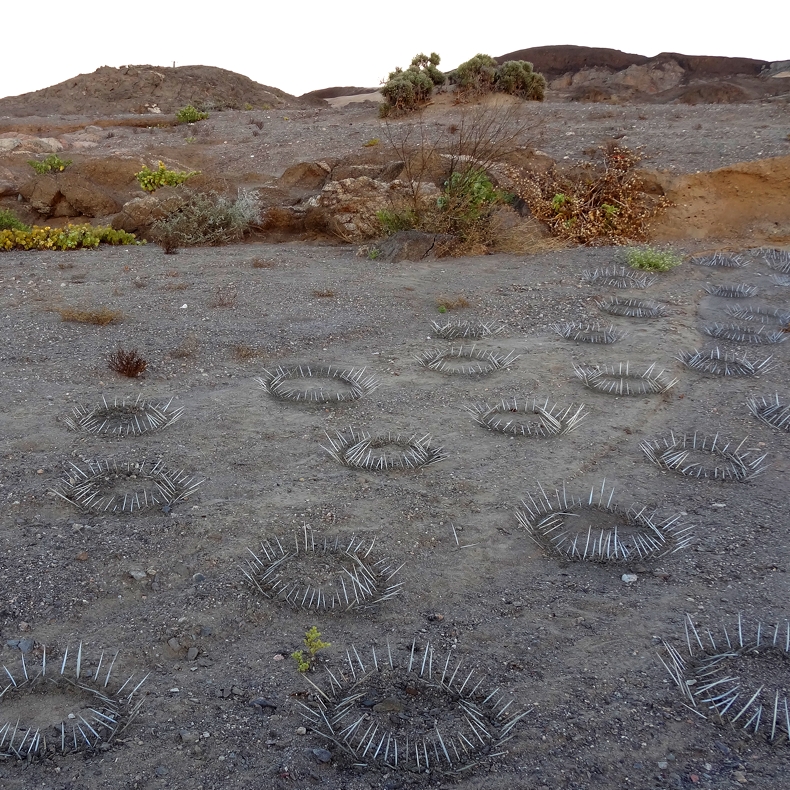
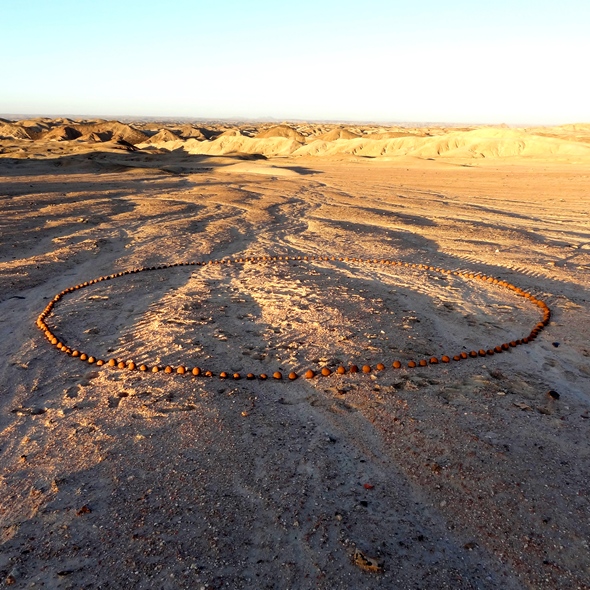
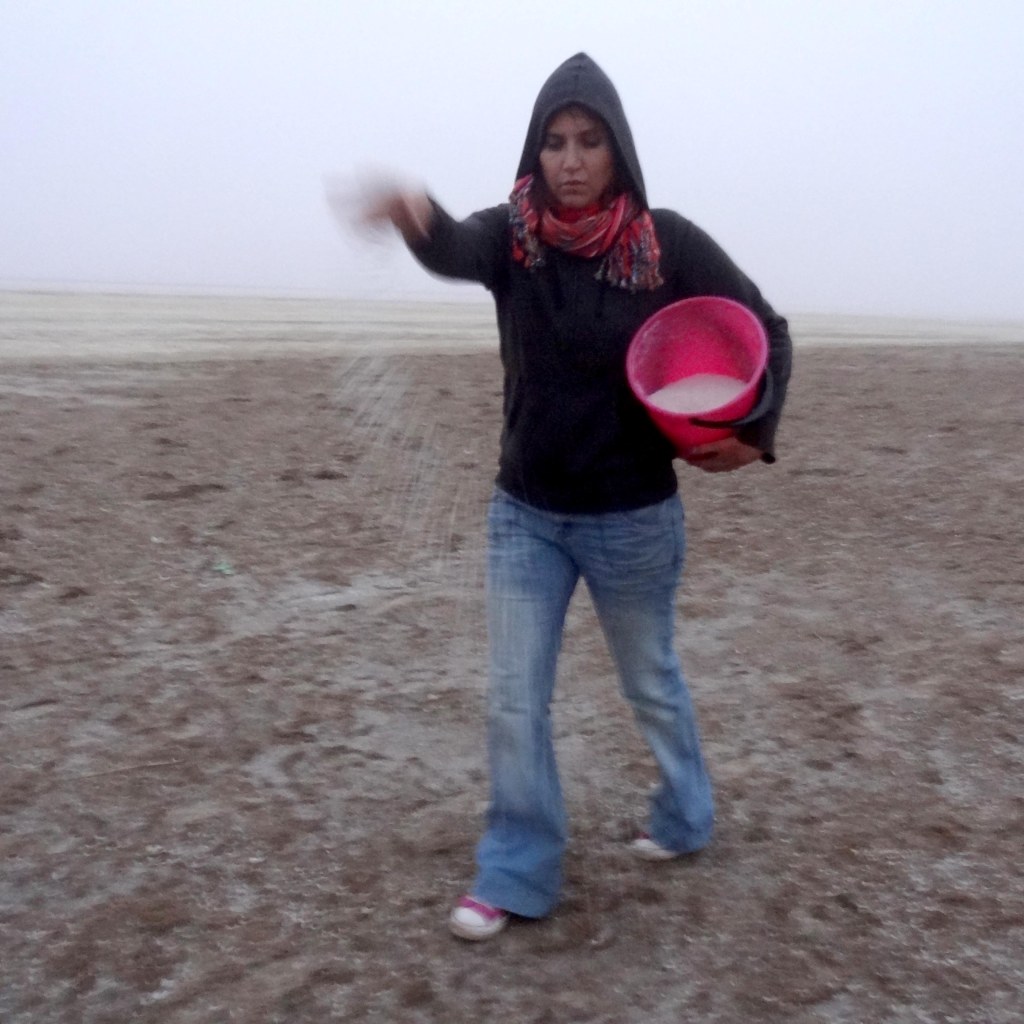
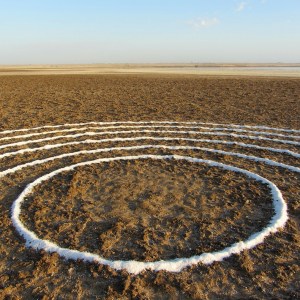
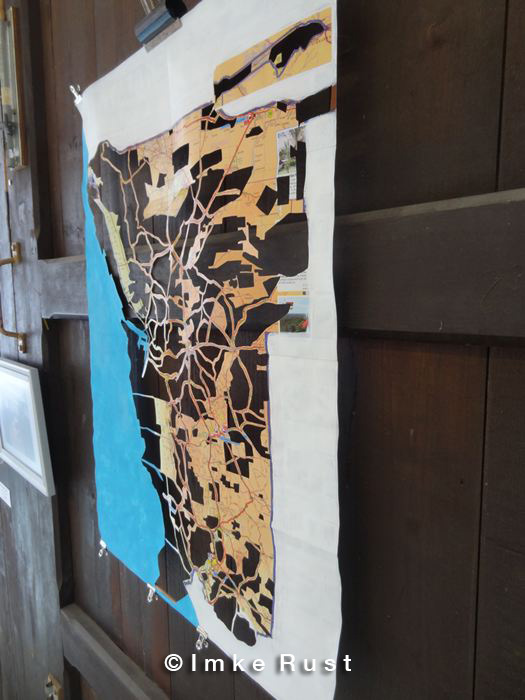
She uses a broad palette of materials — natural and discarded — such as thorns, salt, dung, barbed wire, rubbish bags, stone, and water, combining them into sculptural and performative works. These are mediated through photographic and video documentation, but also emerge as live, performative actions with participation from others, notably a vocal environmental art action on the Swakopmund jetty.
Socio-Ecological and Political Resonance
This project is more than a set of isolated works — it is a critical ecosystem in its own right. Rust’s interventions serve as a mirror to environmental injustice and as a kind of symbolic reclamation. Through her “land-art laboratory,” she foregrounds:
- Extractive violence: By making visible the often-invisible structures of exploitation — mining concessions, toxic waste, displaced land rights.
- Ecological fragility: The Namib, a desert ecosystem, becomes a site of poetic yet urgent resistance.
- Community and participation: By involving others in performative gestures, Rust reactivates communal agency.
- Memory and history: Works like Repeating History tie environmental crisis to colonial and socio-political legacies.
- Material politics: Rust’s choice of humble or discarded materials (dung, salt, rubbish bags) underscores how even the lowliest matter can hold deep meaning.
From Project to Exhibition
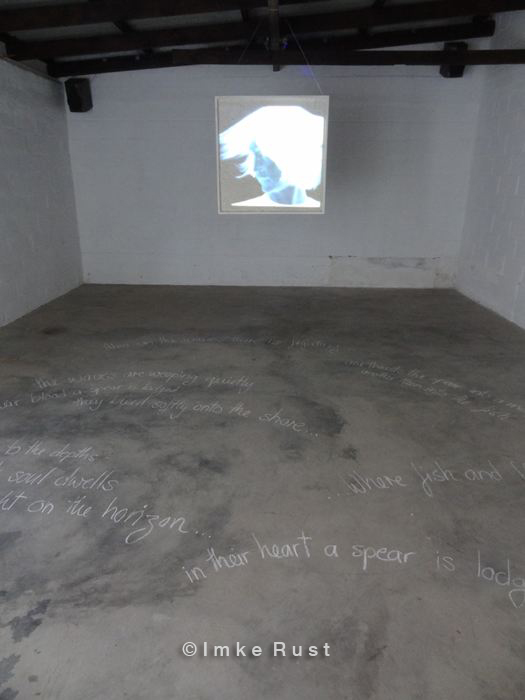
The project culminated in the exhibition …and I sensed an infinite scream passing through the Namib, which was presented at The Last Resort, an independent project space in Swakopmund, from 9–29 December 2012. Namibian This decision followed the cancellation of Rust’s booking at a more conventional gallery by the local arts association, which deemed her work “politically charged” and inappropriate for the institution. Namibian+1
In the exhibition, the desert interventions were re-presented via photographic prints, video documentation, and immersive installations. Through this framing, Rust invited the local audience — and later, a broader viewership — into a dialogical space, where art is not only commentary but a call to responsibility.
Conclusion
Imke Rust’s An Infinite Scream – Namib Desert is thus not only an environmental art project, but a deeply socio-ecological, post-extractivist inquiry. It challenges viewers to reflect on the contested future of landscape, resource, and community — and insists that art can be an act of resistance, care, and transformation.
>> CLICK ON THE IMAGES TO FIND OUT MORE ABOUT THE INDIVIDUAL PROJECTS. <<





2012










 Imke Rust