An exploration of correspondence across place, time and cultural memory
World Heritage Scholarship, Hälsingland, Sweden

Drawing Certainty from the Spring of Doubt emerged from a residency connecting two UNESCO World Heritage sites: the decorated farmhouses of Hälsingland in Sweden and the ancient rock engravings of Twyfelfontein (/Ui-//Aes / Spring of Doubt) in Namibia.
Rather than seeking historical similarities, the project explores how distant places, stories and material traces can enter into correspondence with one another. Through drawing, collecting, listening and site-responsive installation, the work investigates how meaning arises in the space between cultures, times and perspectives – a recurring concern throughout my artistic practice.
“I noted that this is in fact a three-way dialogical process, as I (the artist) am a distinct third element.”
The project marked an important step in my ongoing exploration of correspondence as an artistic method. Rather than treating places as fixed entities to be documented or compared, the work understands meaning as something that emerges through relationships, attention and participation. The installation became a temporary meeting ground where histories, materials, landscapes and personal experience could unfold together in new ways.
About the installation:
Drawing Certainty from the Spring of Doubt is a site-responsive installation by Imke Rust created for the World Heritage Scholarship 2021 in Hälsingland, Sweden.
Inspired by the World Heritage sites of the decorated farmhouses of Hälsingland and Twyfelfontein (/Ui-//Aes or /Ui-//Ais) in Namibia, a derelict hut has been transformed into a mythical world where the essences of both places correspond to and with each other.
While both sites are unique and separated by vast distance and time, they both bear witness to the global human need to creatively express and modify our surroundings to create the illusion of alternative realities.
The farmers of Hälsingland painted the walls of their festivities houses to create a sense of the unattainable luxury of marble, fine silk wallpaper and teak wood. Many years before that, the creators of the rock-engravings at Twyfelfontein depicted stories of attaining animalistic-magic powers during trance and ritual dance, on the rock faces around an (unreliable) spring in Namibia.
The creative interventions have charged the space with several layers of meaning, giving the viewer a mixed sense of recognition and mystery. Found materials are interwoven with images of Namibian fauna and Swedish flora, creating new narratives and reflecting on the creative spirit through time and space.
The Hut

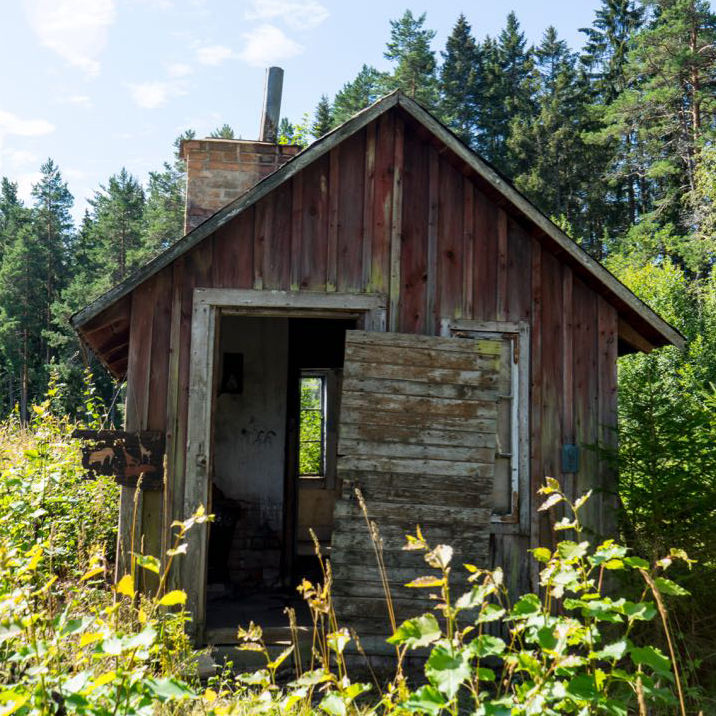
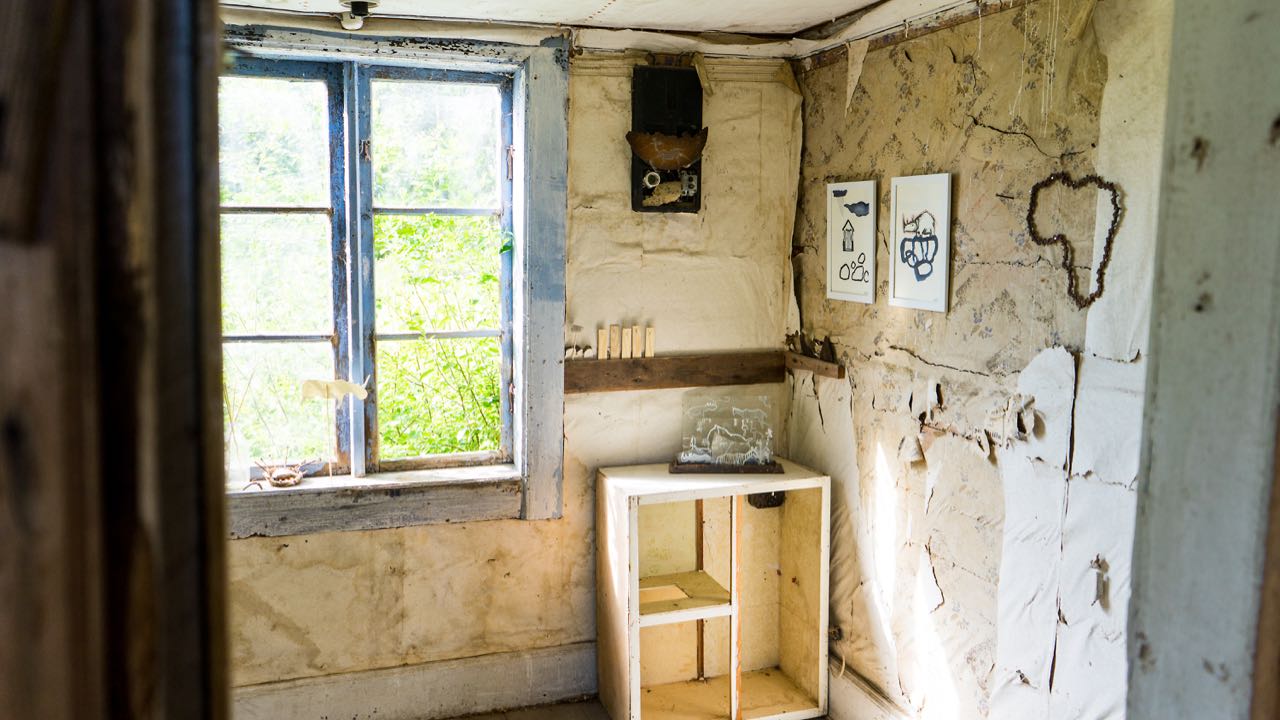
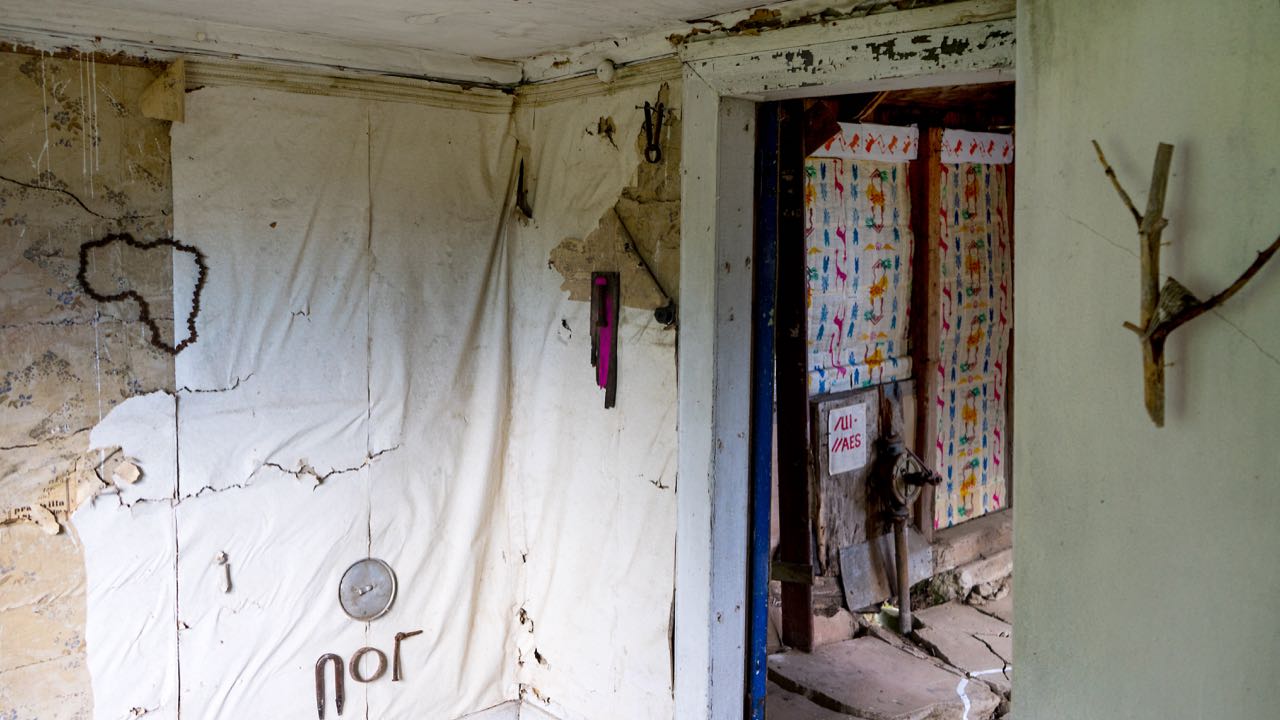
From the outside the inconspicuous hut appears abandoned and derelict, but once you enter, it has been transformed into a world of its own. The hut has two rooms. For my installation, I have called the first room ‘The Shaman’s Hall’.
The Shaman’s Hall
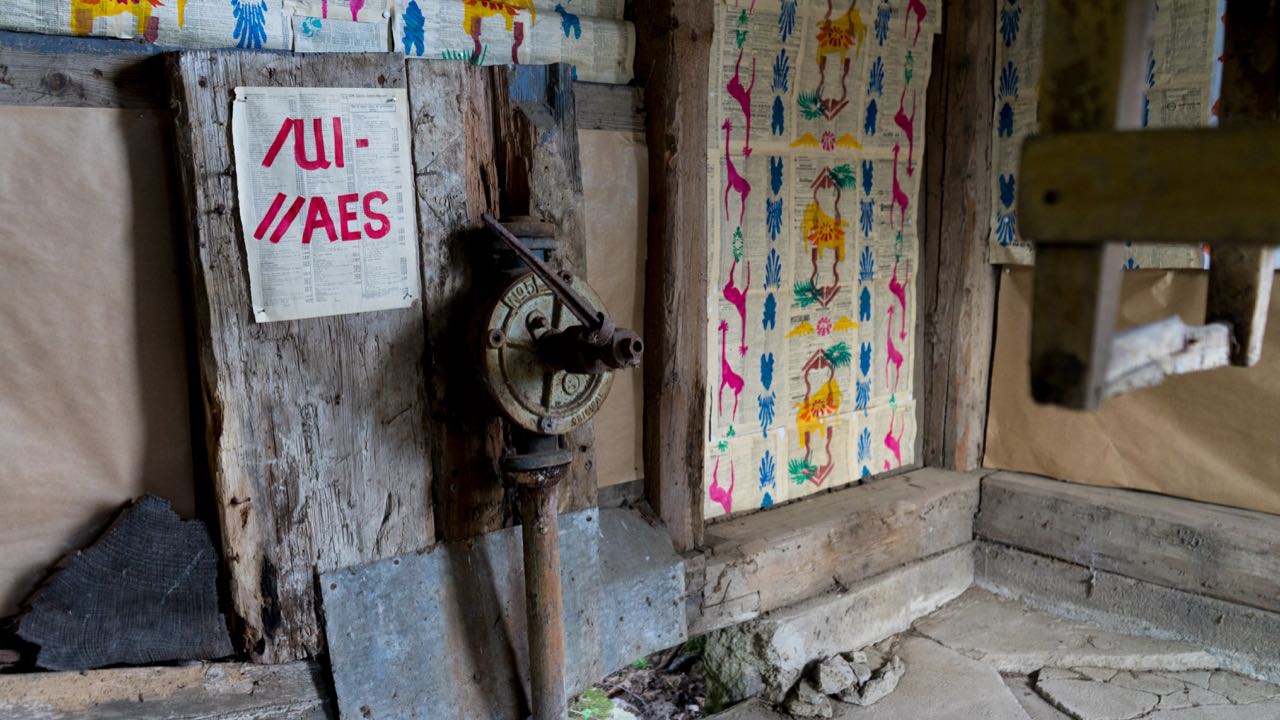
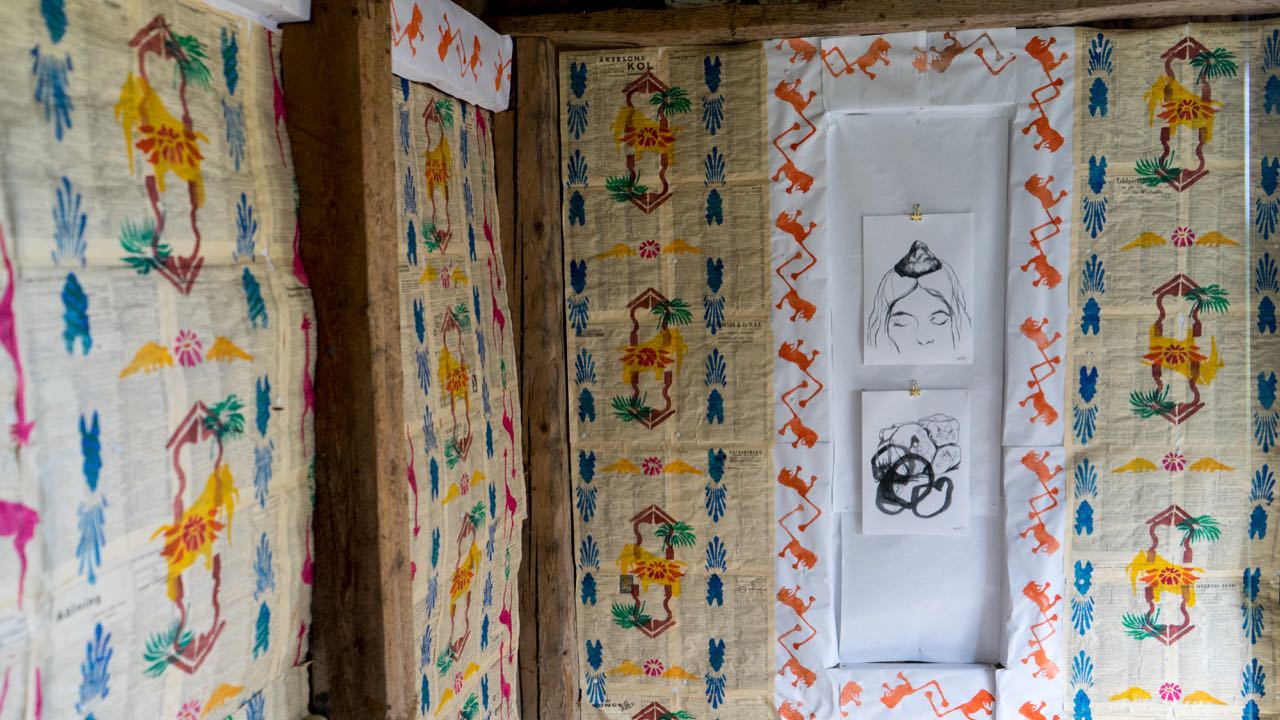
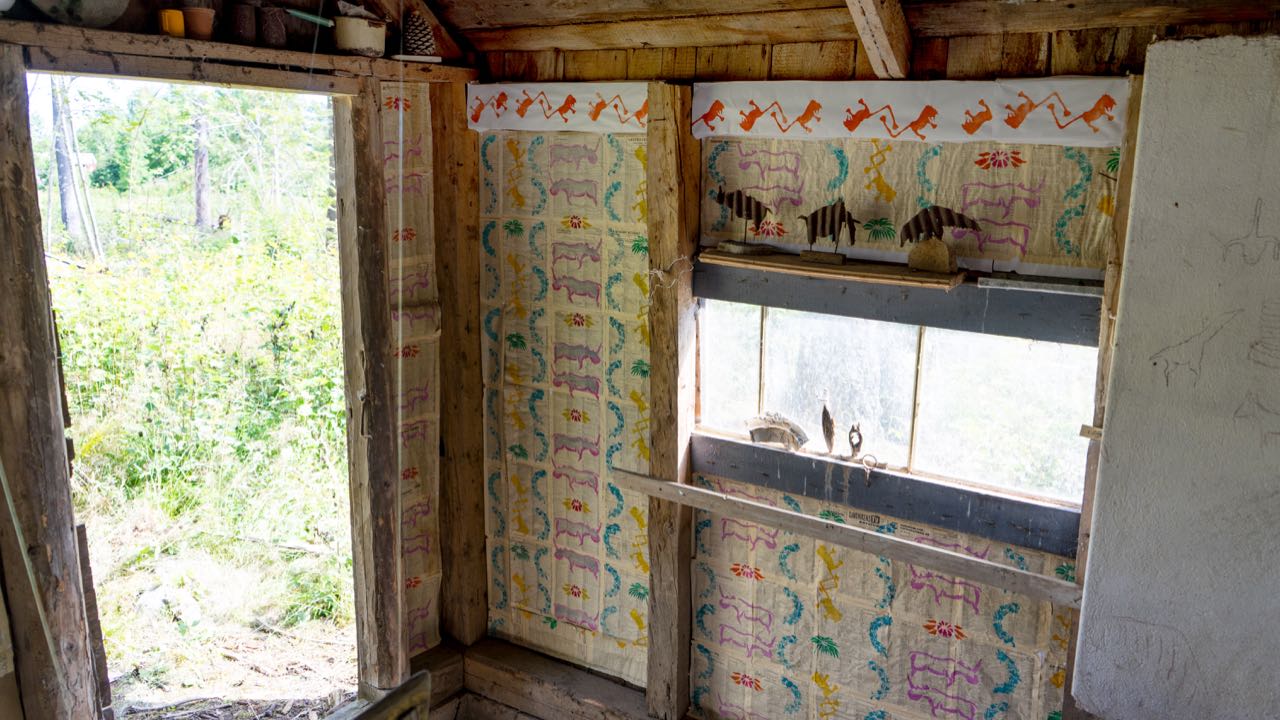
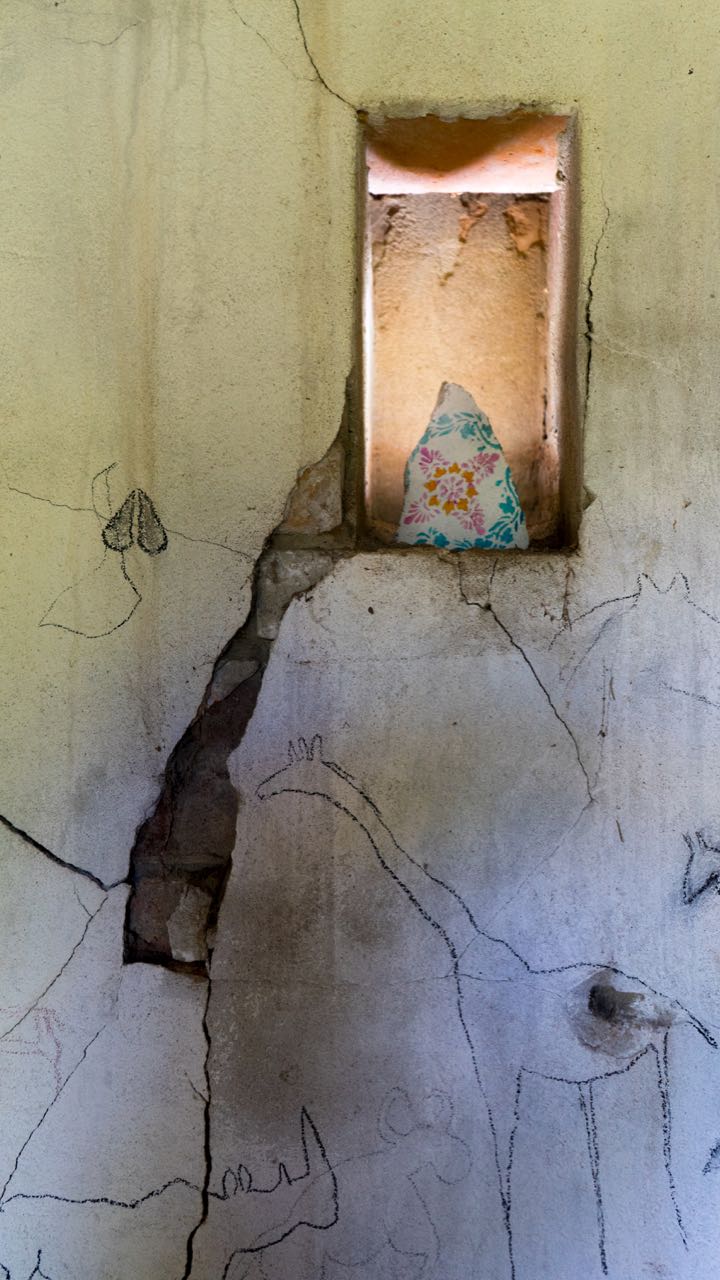
… is a colourfully decorated space, the wooden walls have been covered with hand-painted ‘wall-paper’ – designed from elements of Twyfelfontein (mostly fauna) and the Hälsingland farmhouses (mostly flora). The design is stencilled on telephone book pages from 1966, found in the hut.
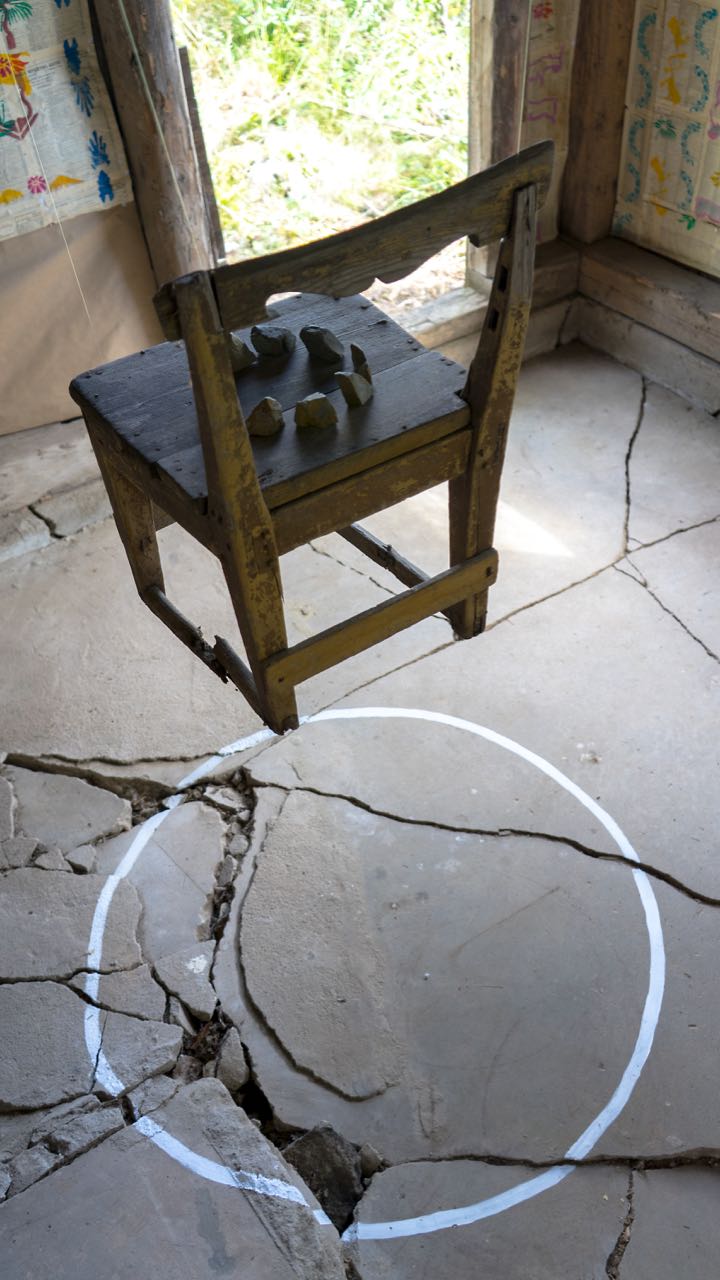
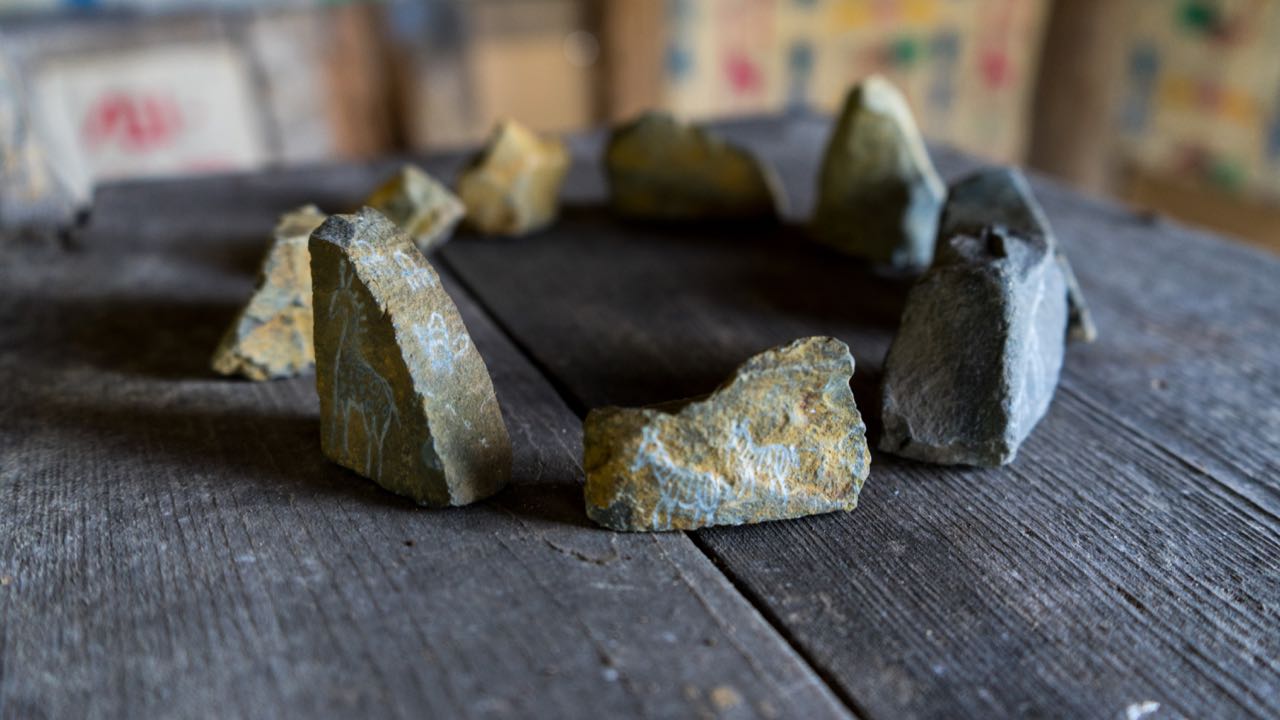
The centre-piece is a wooden children’s chair, suspended in the middle of the room above a white circle painted on the floor. It is an allusion to the belief that the Twyfelfontein shamans could float above the ground during their ritual dances. On the chair is another circle, this time made of tiny stones with engraved African figures.
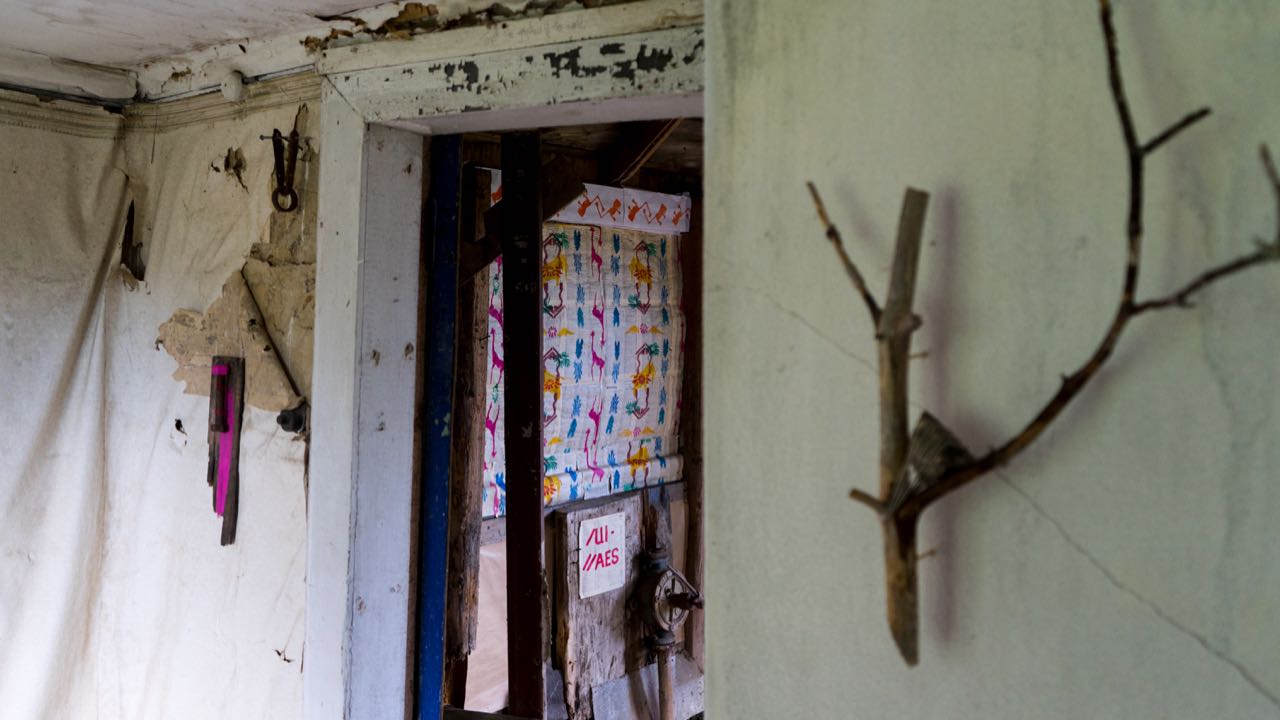
Another dominant feature is the old, oversized, metal water tap found in the room, which creates a direct link to the spring/fountain of Twyfelfontein or /Ui-//aes, as it was originally known.
Following are some impressions of the Shaman’s Hall (first room).






The Bride’s Chamber
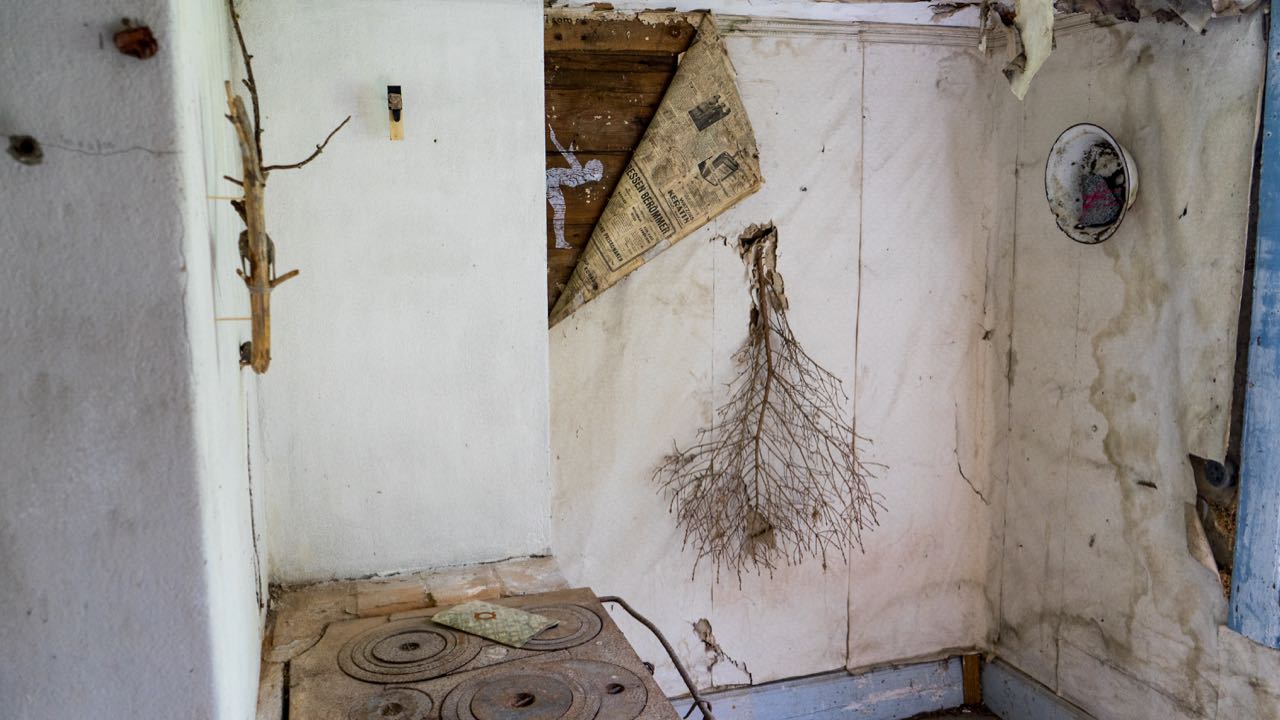
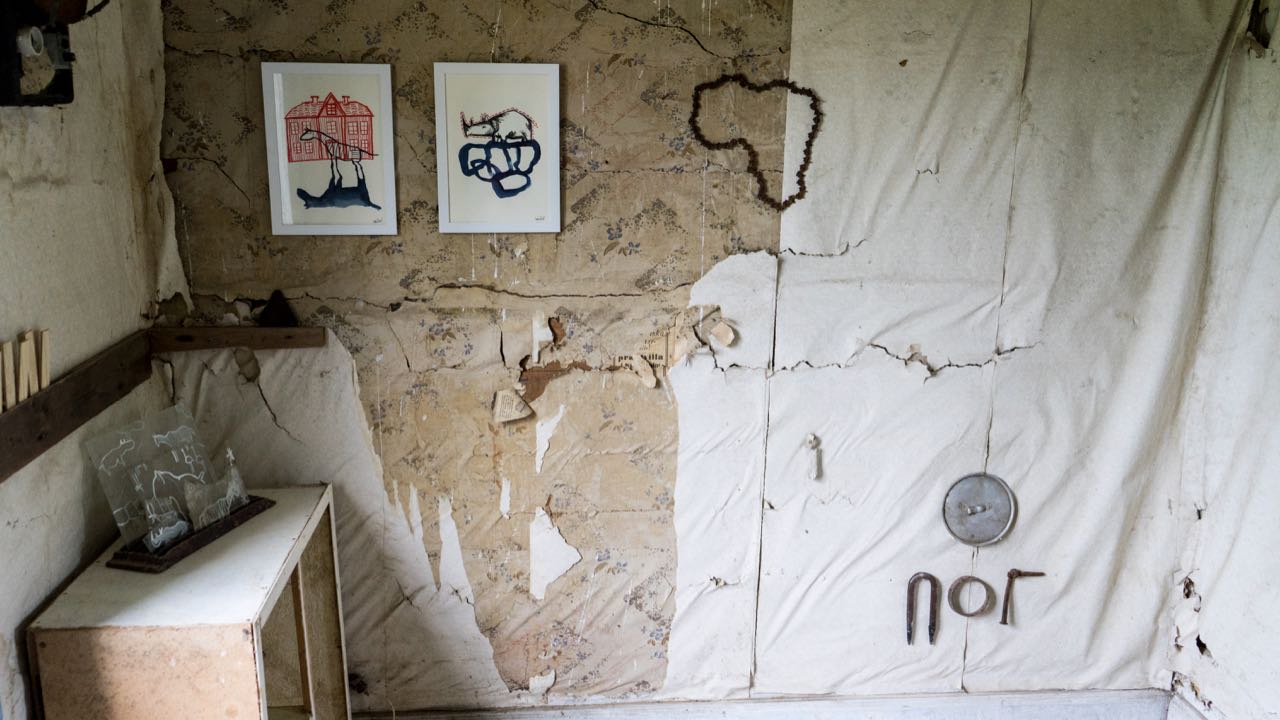
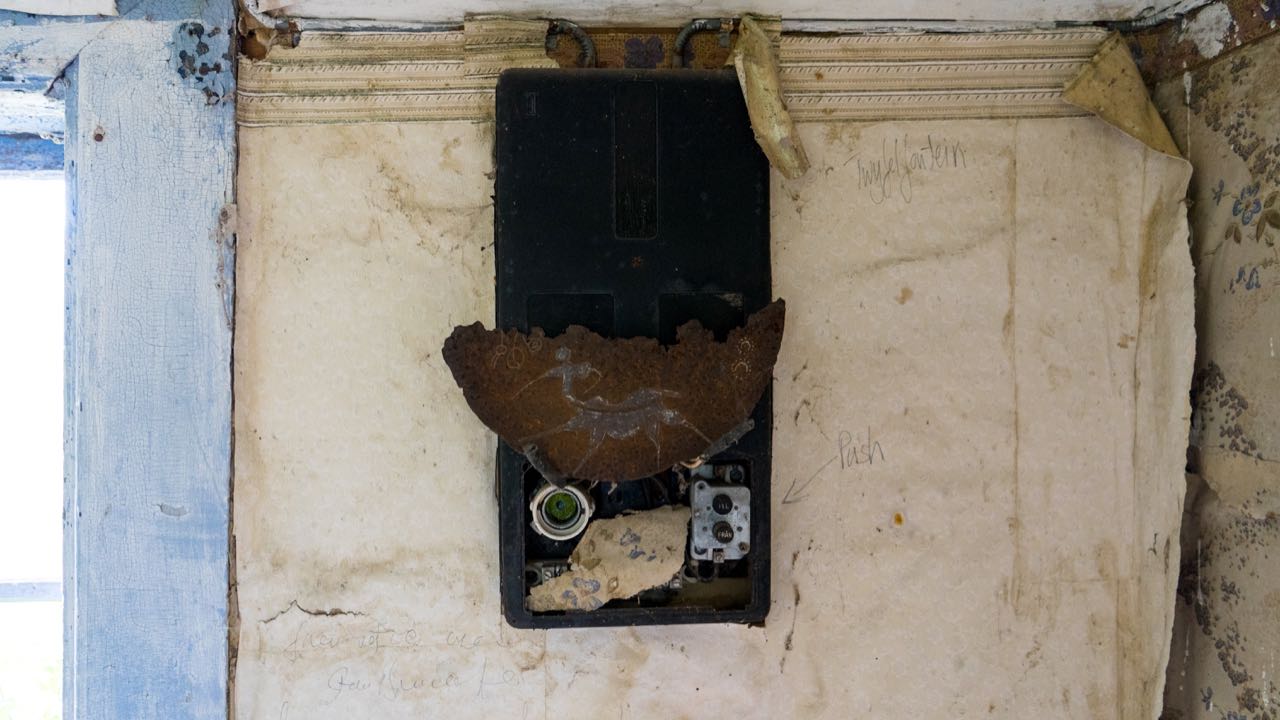
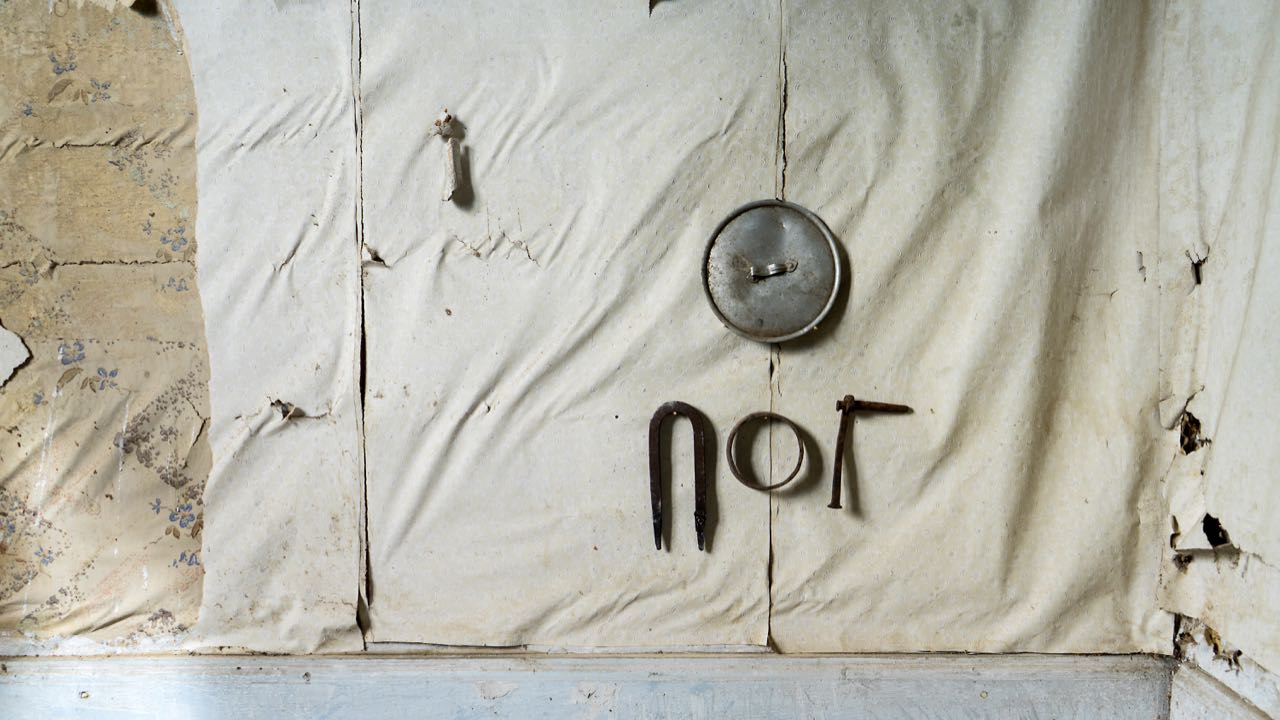
The second room is called the Bride’s Chamber. The Hälsingland festivities houses were mainly used for weddings and usually had a special bride’s chamber. This room was covered in old, white wallpaper, torn at places to reveal older layers of wallpaper with blue flower design and old newspaper.
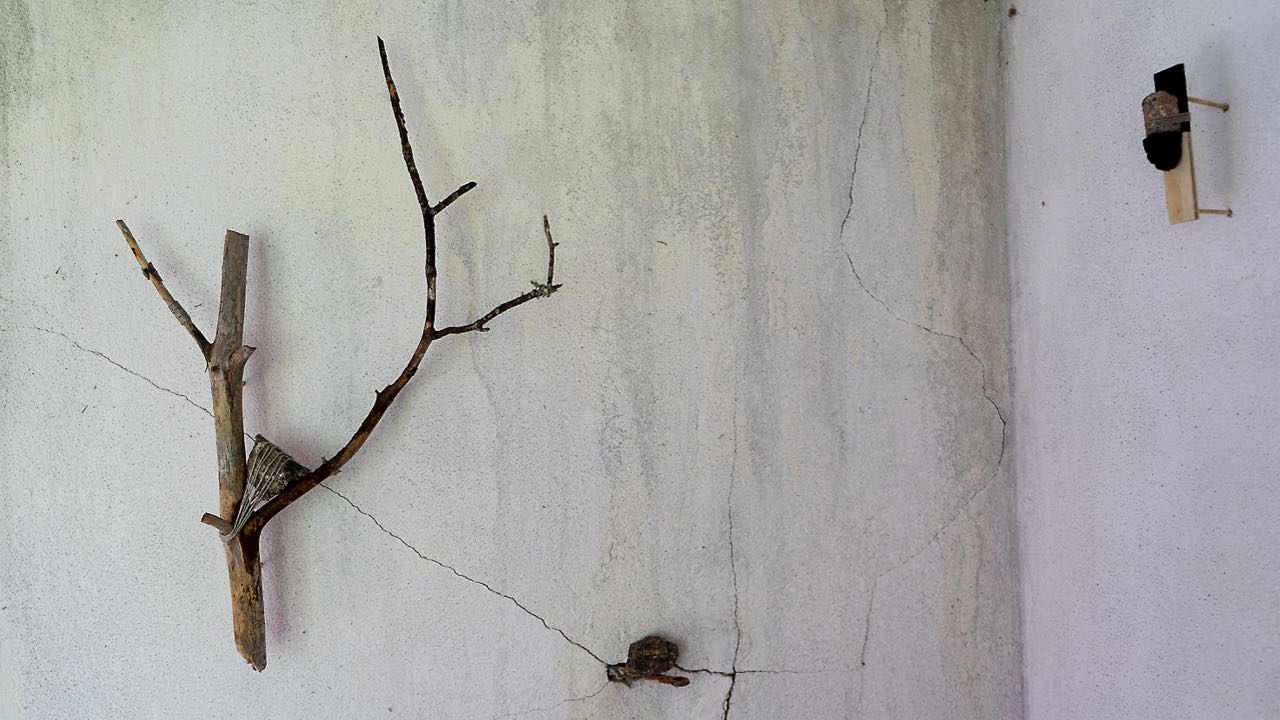
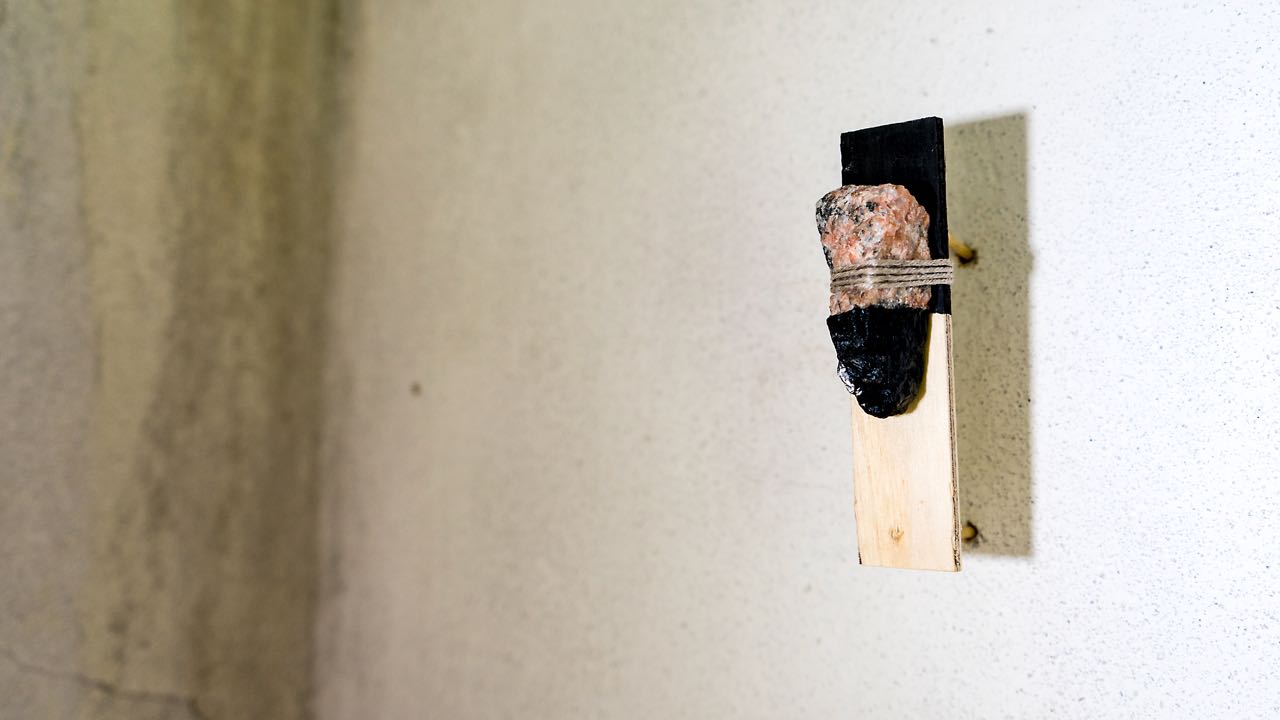
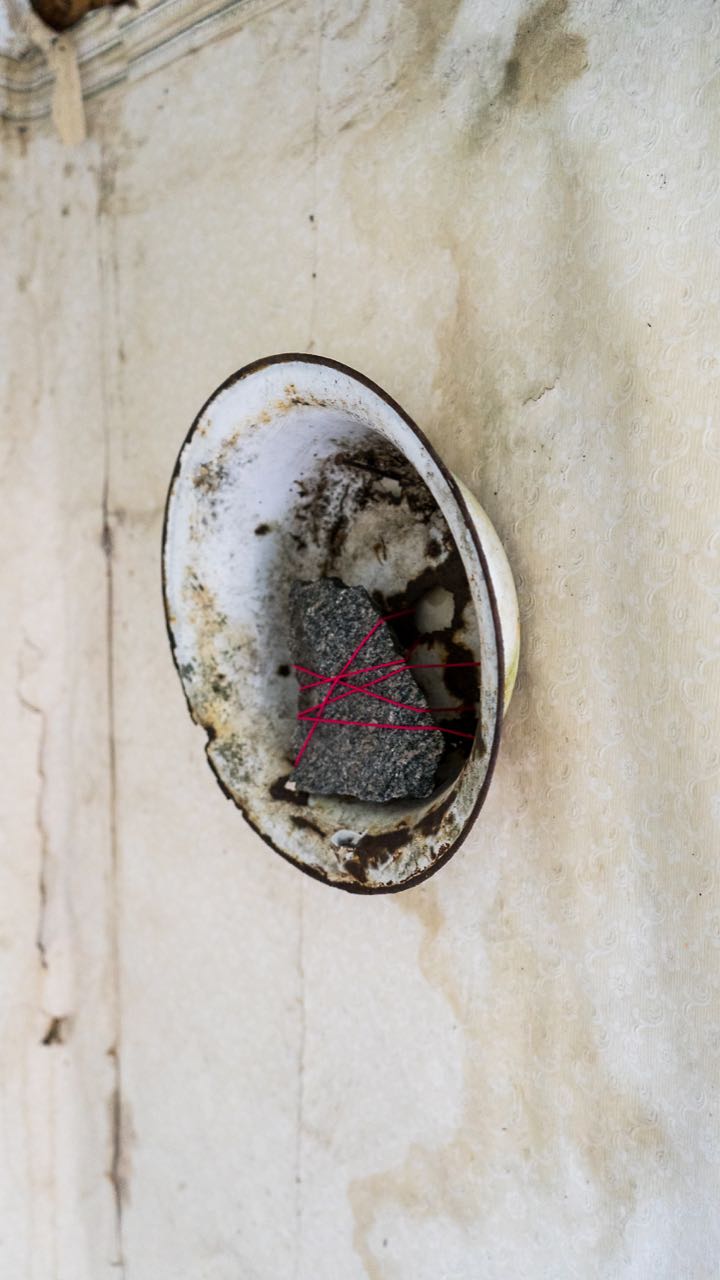
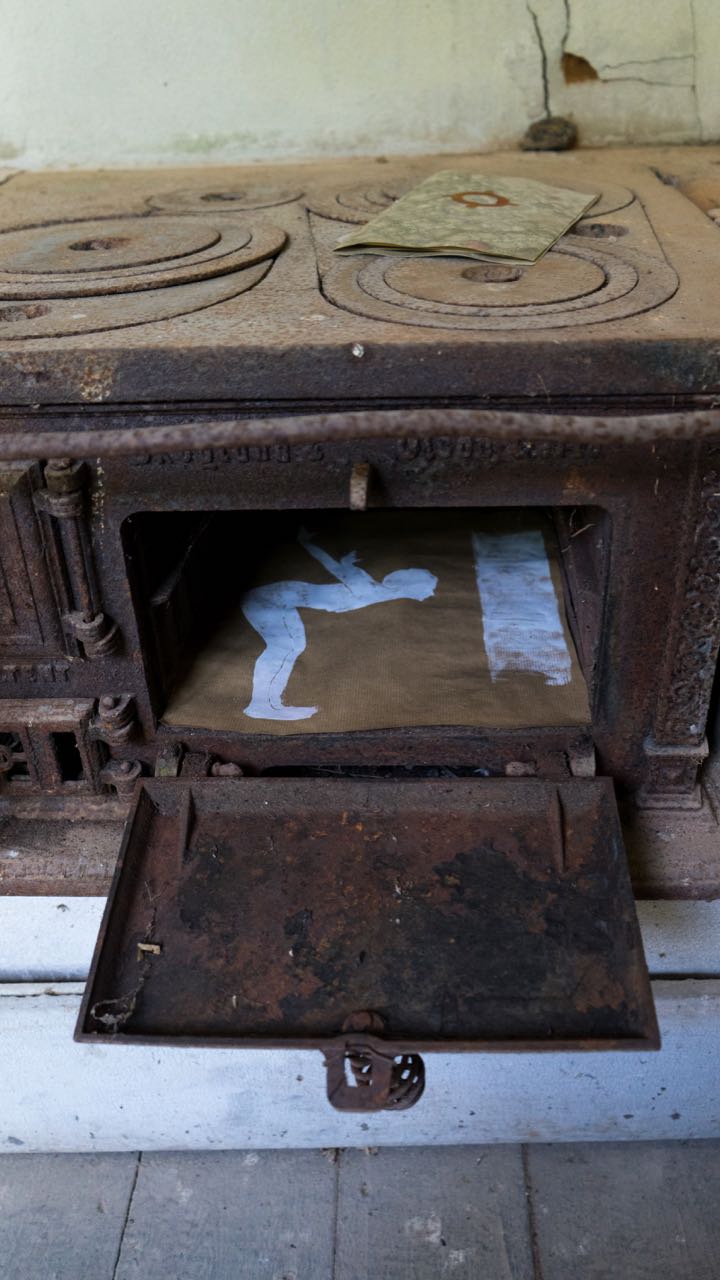
In this room I have ‘married’ found natural and man-made materials into objects, which each tell their own story about correspondence between objects, places and people. There is also a white self-portrait printed on the raw wooden wall, seemingly looking between the layers of time and space.




Söderhamn’s Lessons in Correspondence*
*Correspondence is an open-ended, dialogical process of unfolding and becoming. An in-between-ness. (Tim Ingold)


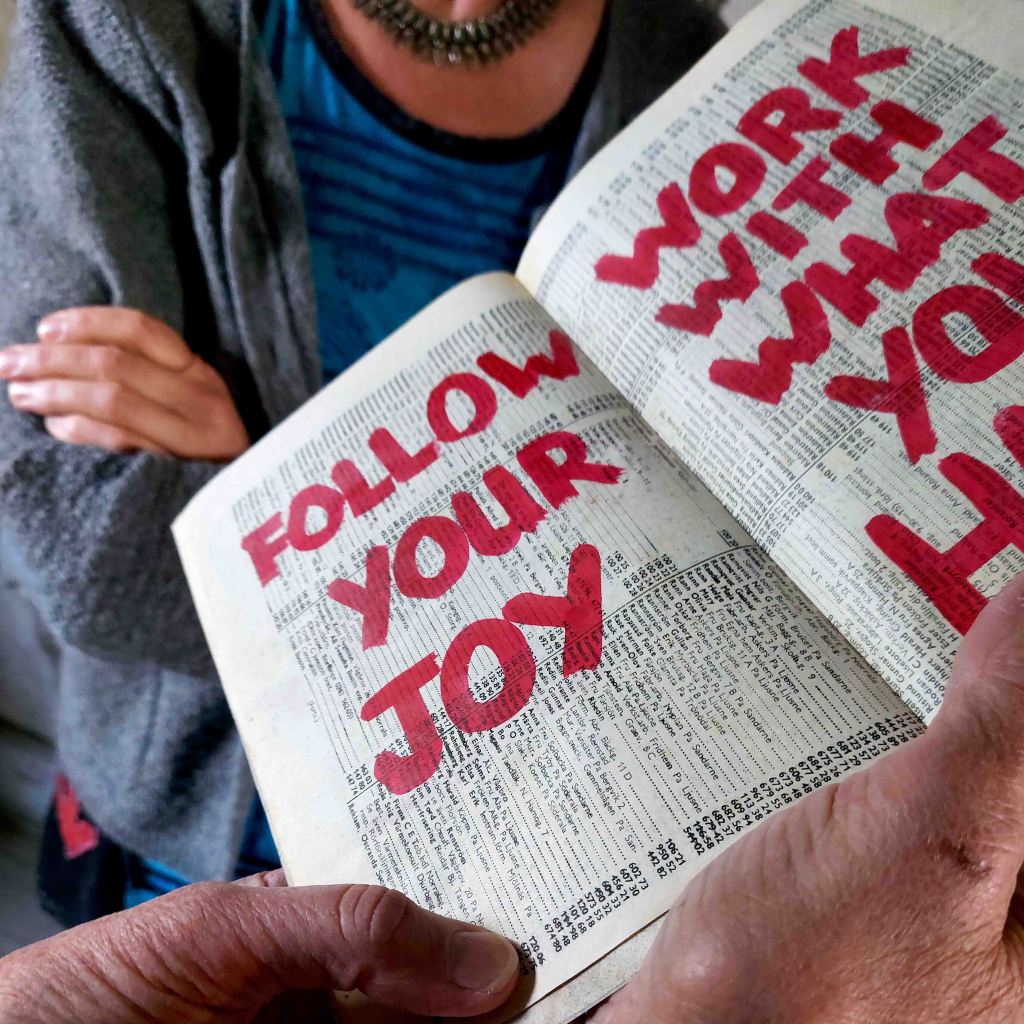
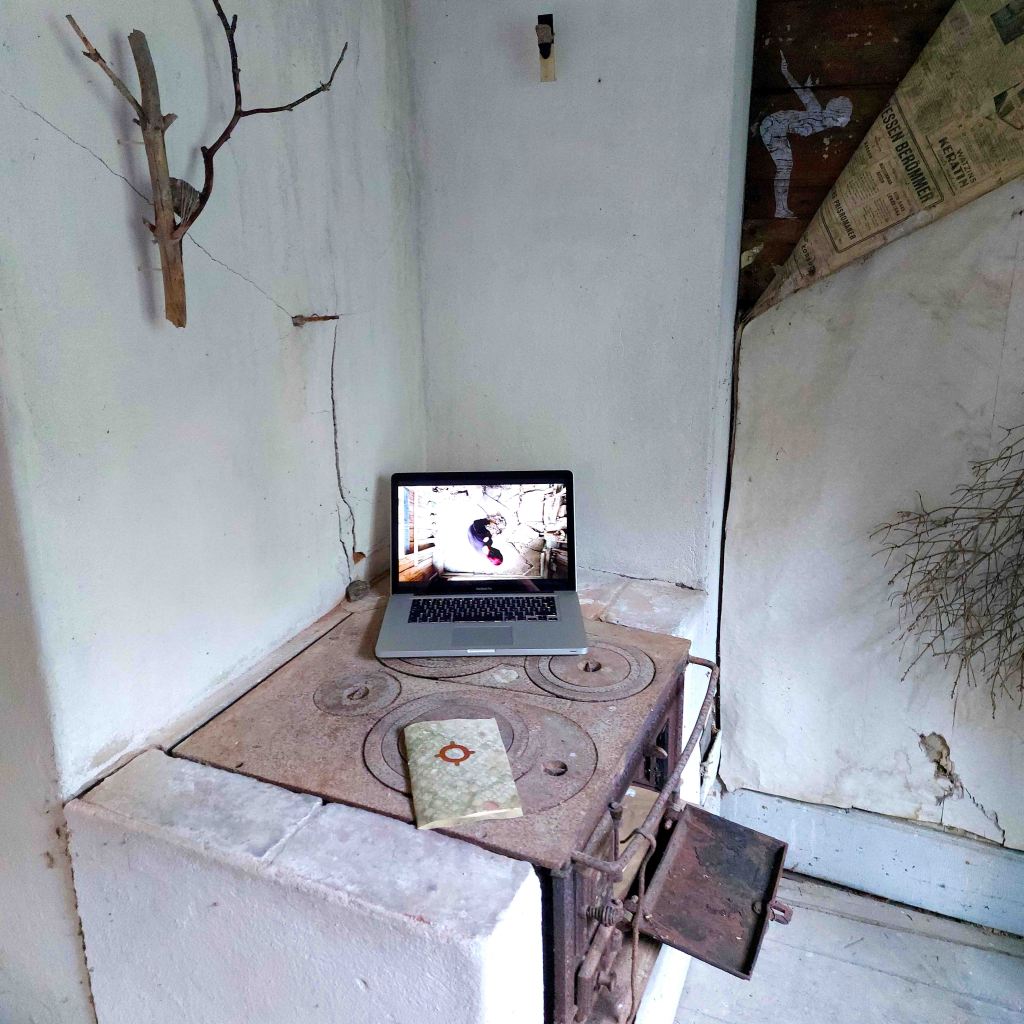
Created alongside the installation, the booklet Söderhamn’s Lessons in Correspondence traces the process behind the work.
Through a series of reflections, it documents how attention, uncertainty, listening, and responsiveness became tools for connecting distant places, histories, and materials. The booklet offers an insight into correspondence not only as a theme, but as the methodology through which the installation emerged.
“[…] In the process I noted that this is in fact a three-way dialogical process, as I (the artist) am a distinct third element. Not only am I a translator, mediator and documenter between the two sites, but only my involvement with them calls this correspondence into life. I am an integral and important part of this connection.
My personal correspondence with the two sites and their connection to each other, started an unfolding and becoming within me, and within the process of creating. I also became acutely aware of the sites’ current, contemporary state, in addition and opposition to their ancient, historical significance and world heritage status.
Through an intentional state of deep listening and awareness to the unfolding and becoming, as a result of my involvement and presence at Erik-Anders, I entered a special inner dialog with the place and situation. […] “
The cover of the book has been cut from a piece of wallpaper found in the hut, which houses my installation. Like weathered skin, it speaks of a worn and used life, of tenderness, beauty, fragility, mould and stains… contained in between its covers. The lessons are hand-written onto pages of an old telephone book from the region.
 Imke Rust